


Purposeful Rounding in Nursing: Benefits and Best Practices
In this article
A round has little value when nobody can confirm that it happened, what staff found, or what action followed. Purposeful rounding makes each planned check needs-led, actionable, and traceable.
Staff assess the patient or resident, address current needs, document the action, and escalate concerns where required. Presence or a timestamp alone does not prove that a purposeful round was completed.
This guide sets out a practical five-P model, implementation steps, and measures for a local pilot. Use local policy, individual care plans, and clinical judgement to adapt the routine.
What purposeful rounding is and the five Ps
Purposeful rounding is a planned, repeated check-in that addresses agreed resident needs. Each round follows a consistent prompt, while the care plan and clinical judgement determine what happens next.
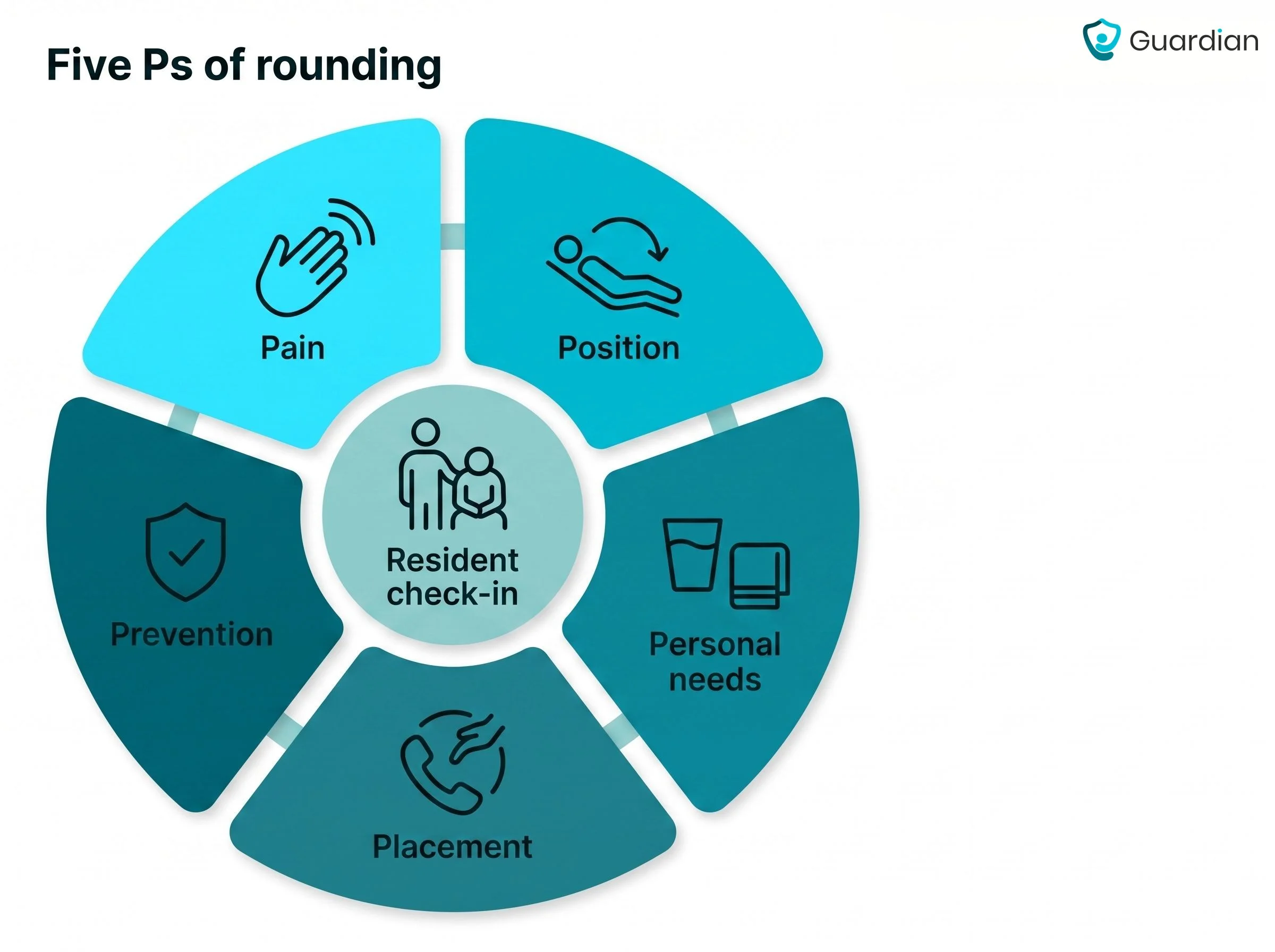
The five Ps in this model keep each check focused:
Pain: Ask about pain and notice new signs of discomfort; report or escalate concerns under the resident’s care plan and local policy.
Position: Check comfort, alignment and pressure risk; reposition only when the care plan, staff competence and safe handling requirements support it.
Personal needs: Offer support with toileting, hydration or communication according to the resident’s preferences and assessed needs.
Placement: Put agreed personal items, mobility aids and the call device within safe reach, then remove immediate environmental hazards.
Prevention: Review resident-specific risks and complete the preventive actions named in the care plan, including any required observation or referral.
An urgent concern sits outside the routine round. Follow local escalation or emergency procedures immediately, and record the action required by policy.
Benefits of purposeful rounding
Purposeful rounding makes routine needs easier to notice, address and communicate. The benefits appear in residents’ daily experience and in the information available to staff between rounds.
For residents: Regular check-ins create predictable opportunities to ask for help, report discomfort or request personal support without waiting for a problem to become urgent.
For frontline staff: The five Ps give each conversation a clear focus, helping staff notice unmet needs and act within the resident’s care plan.
For workload planning: Addressing agreed needs during the round can reduce avoidable interruptions, such as repeat requests for items or help reaching the call device.
For managers: Consistent records make completed care, recurring concerns and required follow-up easier to review without relying only on memory.
For handovers: The next shift receives clearer information about what staff observed, what they did and which concerns still need attention.
How to implement purposeful rounding
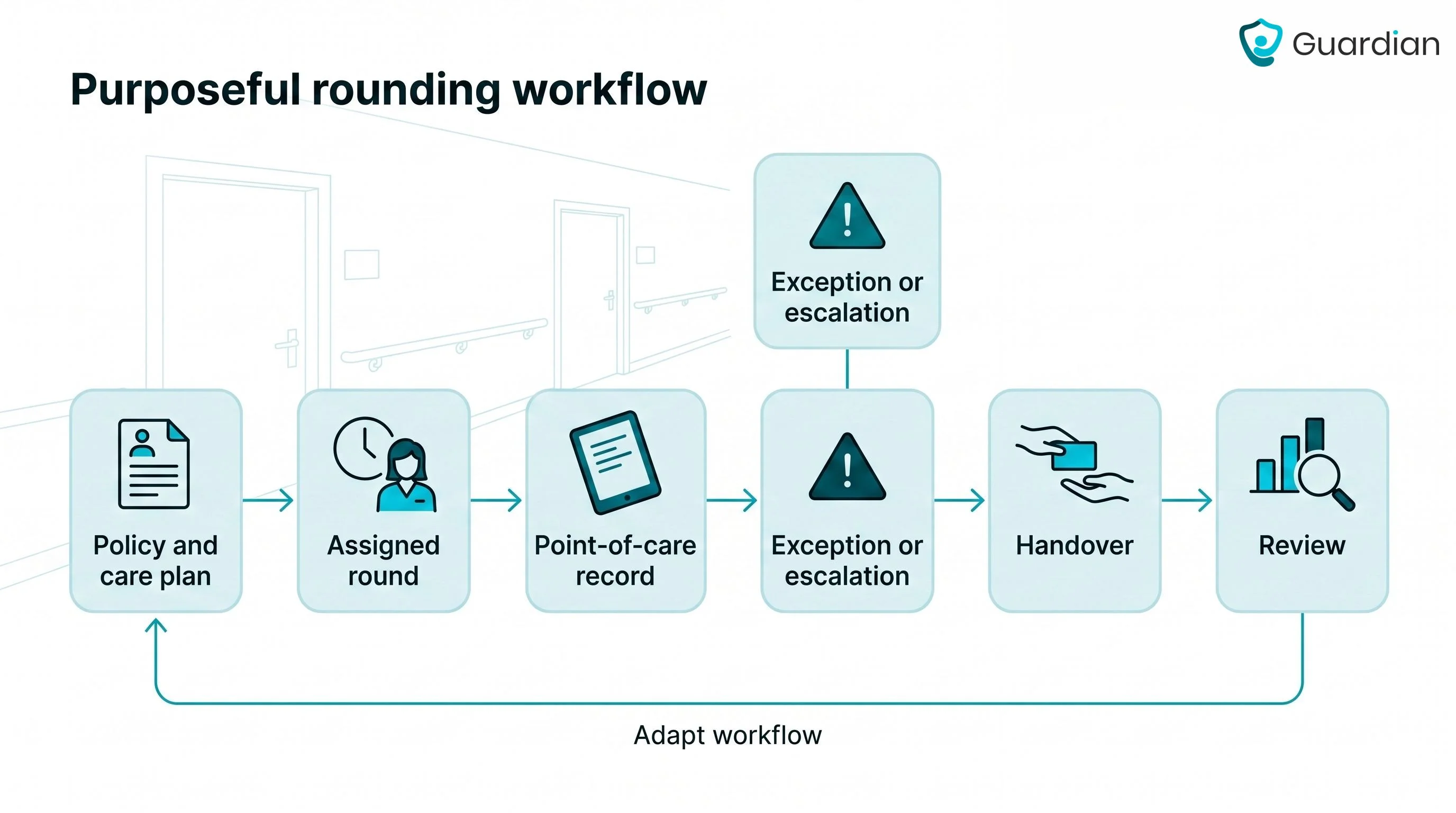
You implement purposeful rounding by turning local policy and each resident’s care plan into a repeatable workflow with clear ownership, documentation and escalation.
Adapt the examples below to local policy, each resident's care plan, staff competence and clinical judgement.
Set the local policy. Define who receives purposeful rounding and how often. State who can vary the schedule when a resident's needs or immediate condition require a different response.
Individualise each care plan. Record how and when the resident prefers to be approached. Add care-plan exceptions where waking or repeated contact would cause avoidable distress.
Assign staff roles. Name who completes each round and who reviews overdue or missed checks. Delegated tasks must remain within the staff member's training, competence and local authority.
Build the round prompt. Use a short, natural prompt alongside the required checks. For example: “Are you comfortable? Is there anything you need before I leave?”
Document at the point of care. The record should distinguish what the resident reported, what staff observed, what action was taken and what still needs follow-up.
Define exceptions. Record a declined round as declined, with the time, reason offered and agreed alternative. Record a missed round separately, including the reason, person informed and next check due.
Set escalation routes. Record the concern, time, relevant observations, immediate safety action, person contacted, instructions received and review time. Follow local escalation routes and work within competence while awaiting support.
Carry open actions into handover. Move each open action into handover with the concern, next action, due time and named owner. The receiving staff member should acknowledge responsibility in the approved handover record.
Review the workflow. Check records with frontline staff and residents. Amend prompts, responsibilities or exception routes when entries show confusion, repeated omissions or follow-up gaps.
Common purposeful rounding problems
Common problems arise when the documented process replaces meaningful contact or leaves responsibility unclear. Fix the workflow at the point where the record stops reflecting the care given.
Checklist-only behaviour: Ask the prompt, pause for the resident's response and record the relevant observation rather than ticking every field automatically.
Copied notes: Write the current resident report and observation; carry forward an earlier entry only when local policy requires it and the information remains relevant.
Unnecessary waking: Follow the care plan and local policy for sleep. Use clinical judgement when the planned round conflicts with the resident's immediate needs.
Missed-round ambiguity: Use a defined status for every outcome. A missed round must never appear as completed or declined.
Actions without owners: Assign one named person and a due time to every open action, then transfer and acknowledge ownership at handover.
How to measure and improve purposeful rounding
Measure purposeful rounding by comparing a four-week baseline with a 6-8 week test on one ward or care team. Record policy or care-plan changes that could affect the comparison.
Track whether each planned round happened and what followed:
Round completion: Compare planned rounds with documented rounds, rather than counting entries without a matching schedule.
Open actions: Count follow-up needs still unresolved at handover and record who accepted responsibility.
Response times: Measure acknowledgement and response intervals for escalated needs, using the same start and end points throughout the pilot.
Exceptions: Review declined, delayed, and missed rounds by reason, then check whether staff followed the agreed pathway.
Resident feedback: Ask whether check-ins feel useful, respectful, and responsive to individual preferences.
Record quality: Sample notes for clear observations, recorded actions, and closed follow-up loops.
Use one table for the baseline and pilot review. Enter the ward's own results rather than setting unsupported targets.
Measure | Baseline | Pilot result | Review question |
|---|---|---|---|
Round completion | Enter planned and documented rounds | Enter planned and documented rounds | Did completion change, and were entries matched to the schedule? |
Open actions | Enter unresolved actions at handover | Enter unresolved actions at handover | Were actions closed or assigned more consistently? |
Response times | Enter acknowledgement and response intervals | Enter acknowledgement and response intervals | Did staff use the same timing points, and where did delays occur? |
Exceptions | Enter declined, delayed, and missed rounds by reason | Enter declined, delayed, and missed rounds by reason | Were exceptions recorded and handled through the agreed pathway? |
Resident feedback | Summarise feedback from the baseline period | Summarise feedback from the pilot period | Did residents find check-ins useful, respectful, and needs-led? |
Record quality | Enter findings from sampled notes | Enter findings from sampled notes | Did notes connect observations, actions, and follow-up? |
Guardian is one operational example. It can create automatic visit records, capture acknowledgement and response timestamps, and attach room or bed context to a digitised floor plan.
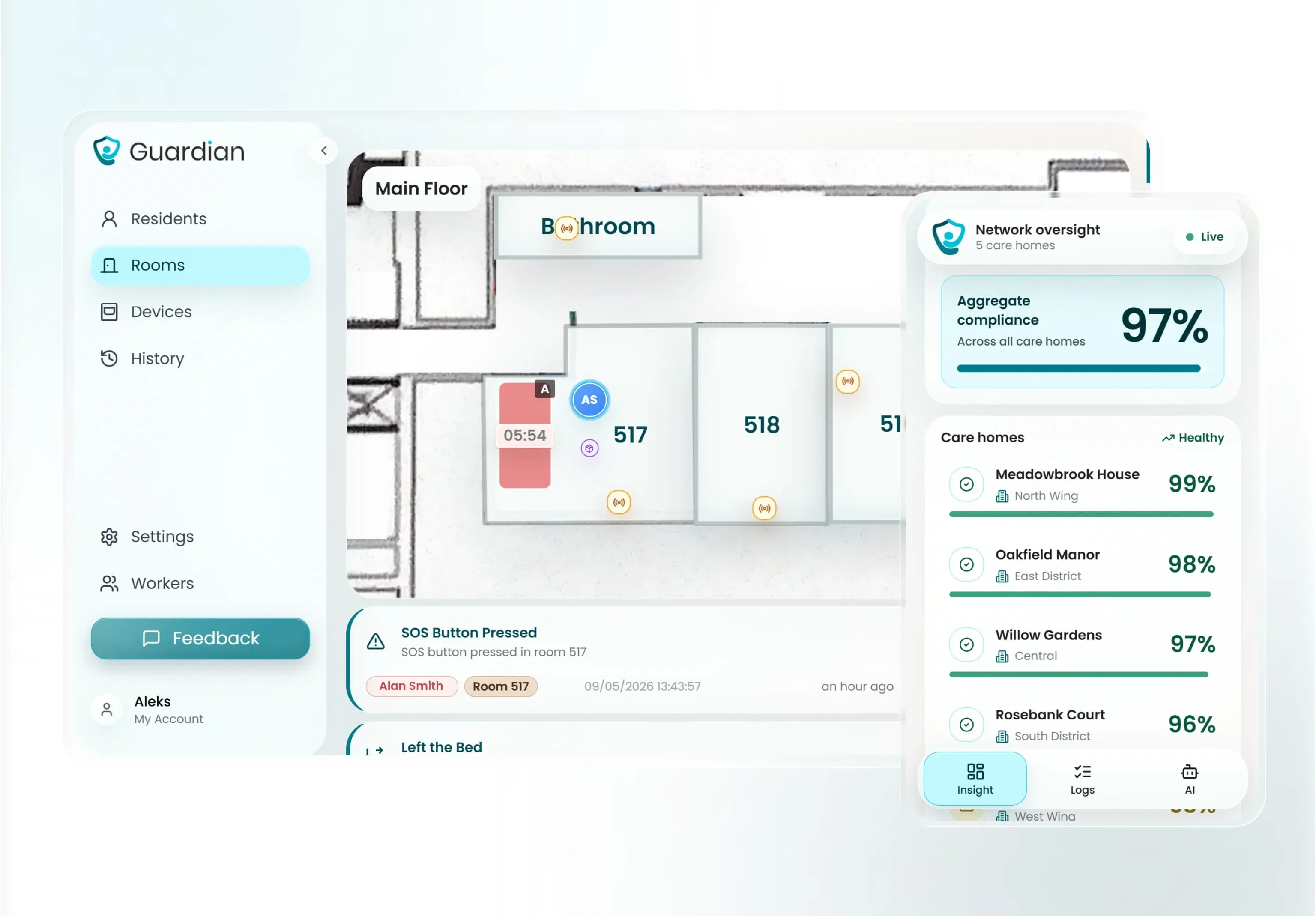
Timestamps support workflow oversight, but they do not prove the content or quality of a clinical assessment. Local policy, care plans, and professional review remain the basis for judging practice.
At the end of the test, compare the pilot with the four-week baseline and review the findings with staff and residents. Use that review to adapt the workflow or end the pilot.
Purposeful rounding needs a complete operating cycle
Purposeful rounding works as an operational standard when visits are planned, shaped by resident needs, documented, escalated when action is required, and reviewed with staff and residents.
Yes. The five Ps used here are pain, position, personal needs, placement, and prevention, but organisations may use different wording or add local prompts.
Useful local extensions can include:
Pumps: check IV equipment and alarms.
Pathway: clear hazards before a resident mobilises.
Plan of care: confirm the next care task and any change in risk.
Privacy: protect dignity during personal care.
Keep the card to prompts staff can act on during a round. A long mnemonic that nobody completes consistently adds paperwork without improving care.
Do not mix rounding prompts with separate clinical mnemonics. Neurovascular assessment and labour assessment use different P-based frameworks for specific assessments.
Leader rounding is a scheduled check-in by a nurse manager or supervisor to identify care barriers, assign follow-up, and check that the issue was resolved.
Leader rounding addresses operational barriers rather than replacing bedside purposeful rounds. Each concern needs an owner and a follow-up check, or staff and residents see no change.
Use the same short check-in each time:
Ask staff: What stopped you completing care safely today?
Ask residents or families: Was help available when you needed it?
Assign an owner: Name who will resolve the issue and by when.
Close the loop: Review the previous round’s actions at the next check-in.
Measure a pilot locally: record a four-week baseline, then run the new rounding process for 6 to 8 weeks.
Completed rounds: compare planned rounds with documented rounds.
Open actions: count issues still awaiting an owner or follow-up.
Resident feedback: log the same short question before and during the pilot.
Guardian alerts: compare acknowledgement and response timestamps with the room and bed shown on the floor plan, then review missed or delayed responses with the team.
Set purposeful rounding frequency from the individual care plan, current risk, clinical assessment, and local policy. The interval may differ by person, shift, and time of day.
Record the planned interval and any required observations before the shift starts.
Protect sleep: meet observation and repositioning requirements without unnecessary waking.
Respond to change: shorten the interval after a relevant change in condition or risk.
Document exceptions: record why a round was early, late, missed, or rescheduled.
Escalate concerns: request clinical review when the current plan no longer fits.
Nurses may share rounds with nursing assistants or care workers when local policy, competence, supervision, and escalation arrangements allow it. The appropriate registered professional remains responsible for clinical assessment and delegation.
No. Hourly describes the interval, while purposeful describes what staff assess, do, document, and escalate during the visit.
Being present at the bedside is not enough. A complete round should show:
Assessment: the current need or safety concern checked.
Action: the intervention made or the reason none was required.
Documentation: the result, exception, or escalation recorded.
Automated records can show whether visits followed the rounding plan, but a timestamp does not prove that an assessment occurred. Nurses and care staff still decide what each person needs.

Author
Aleks Timm
Aleks Timm leads Guardian and builds privacy-first operations technology for care homes and home care providers. Teams get location-aware alerts they can act on, clearer situational awareness, and measured insight into how care work actually runs.
Read MoreRecommended reads
Keep reading
Remote patient monitoring: a complete guide
Remote patient monitoring: the complete guide to sensors, benefits, and buying tips for safer care homes and better resident...
Read more
Patient bed alarms for elderly & hospital care
Patient bed alarms help prevent falls in elderly and hospital care. Compare alarm types, choose the right sensor, and protect...
Read more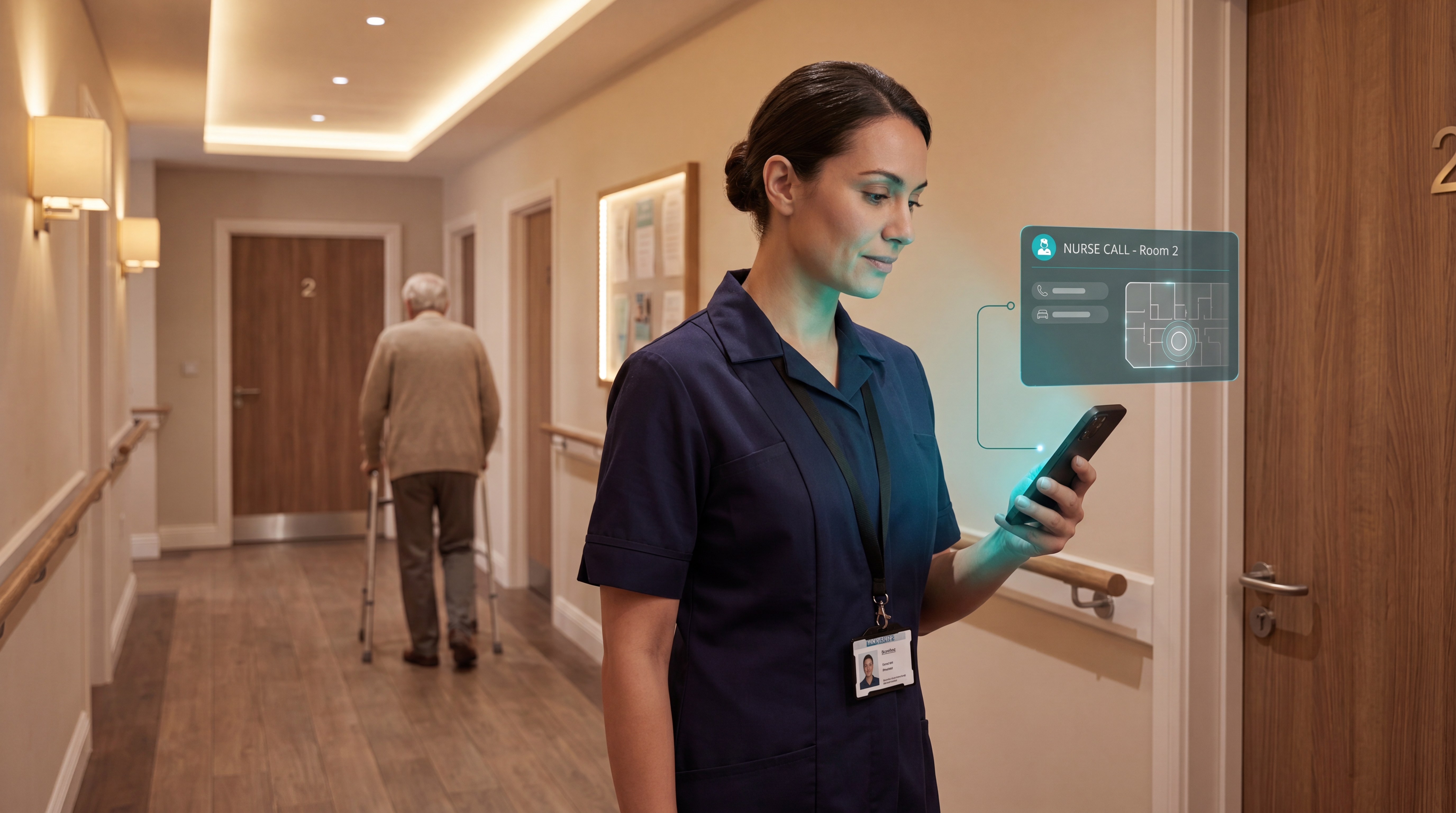
Smart Nurse Call Systems for Care Homes and Home Care Providers
Smart nurse call systems for care homes and home care providers: compare features, improve response times, and choose the right...
Read more