


Assisted Living Regulations by State
In this article
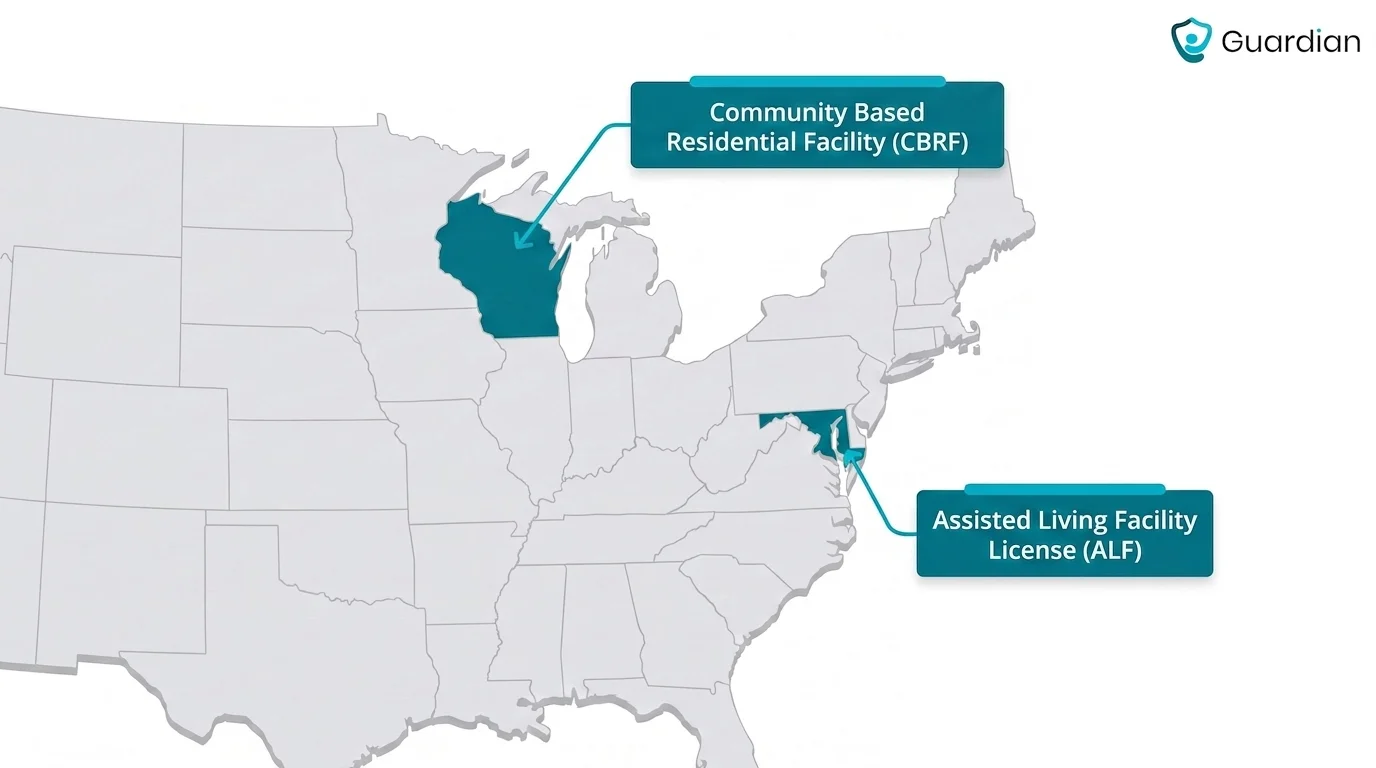
Assisted living regulations change at the state line. Maryland and Wisconsin use different facility categories and oversight structures, so operators working across jurisdictions need the right rule for each licensed site.
This guide shows how to match any facility’s legal category to its state rule set and official sources. Maryland and Wisconsin provide running examples, with other states included where they illustrate a different regulatory approach.
Inspection records need to show what staff documented and when. Dated entries give surveyors an account of an event without asking staff to reconstruct it from memory.
Who regulates assisted living?
Assisted living has no single federal regulator. States define facility categories and assign licensing, inspection, and enforcement to their agencies; CMS does not issue the core state license.
Maryland: Maryland OHCQ licenses assisted living programs under COMAR 10.07.14.
Wisconsin: Wisconsin BAL, within the Department of Health Services’ Division of Quality Assurance, oversees facility types including community-based residential facilities and residential care apartment complexes. Licensing and survey rules differ by facility type.
Why license names vary by state
License names vary because each state writes its own legal categories for residential care. Maryland uses “assisted living program,” while Wisconsin regulates categories such as community-based residential facilities and residential care apartment complexes.
Marketing terms do not determine the rulebook. Check the legal category on the license, then use that category's state regulations and survey guidance.
What assisted living rules usually cover
Assisted living rules usually cover the decisions staff make each day, from move-in to a complaint. States group those decisions differently, but four areas recur.
Admission and continued residence, including transfer when needs change
The people on shift and what they are trained to do
How resident needs become a plan for daily support
How residents raise concerns and how the state responds
State definitions and thresholds differ, so the four areas are a reading framework, not nationwide requirements.
Admission, retention, and scope of care
Admission and scope-of-care rules determine whether a facility’s license and staff can meet a person’s needs. When those needs change, the same rules define when reassessment or a move becomes necessary.
Before move-in, compare the person's daily needs with the services the license permits.
When needs change, reassess the resident and use the agreement's transfer or discharge process.
Use the license scope to decide if staff can provide a service, such as hands-on personal care.
A resident who begins needing more help at night gives this rule a practical test. The facility checks its care plan and licensed level before deciding whether it can continue care.
Maryland gives one example: continued residence and discharge policy connect to the Resident Agreement and the licensed level of care.
Staffing, qualifications, and training
Staffing rules are about whether the team on a shift can safely handle the work in front of it, including an unexpected change in a resident's condition.
A roster needs to show more than names. It should show who can respond when a resident needs two-person assistance.
Match coverage to the residents and work expected on that shift, especially overnight.
Make task boundaries clear, such as who may assist with a scheduled medication and when a licensed nurse must take over.
Keep an orientation record for each worker, then update training and credential files as they change.
Assessments, care plans, and medication help
Assessment, care-plan, and medication rules turn a resident’s needs into a written plan for daily support. The plan identifies who can provide each kind of help.
At move-in, note a practical safety issue, such as whether a resident needs help transferring from bed to chair.
The service plan can assign morning transfer assistance to a named role and state when staff review it.
Residents should take part in care planning and choices about medical treatment.
Medication records should distinguish help with self-administration from a dose given by qualified staff.
Record a change in condition, such as new dizziness after a medication change, and update the plan when required.
Maryland gives residents a service plan based on assessed needs and a role in medical treatment planning.
In Wisconsin RCACs, the 28-hour weekly service cap makes it important to identify who provides medication-related help.
For current wording, use the Maryland Office of Health Care Quality and the Wisconsin Department of Health Services, Division of Quality Assurance.
Resident rights, agreements, and enforcement
Resident-rights rules give people a say in daily life and care. A defined complaint route lets a concern move beyond the facility.
A resident can use the facility complaint process or contact the long-term care ombudsman program.
The residency agreement should state services and fees, then explain care limits and the transfer or discharge process.
A state survey agency may investigate a complaint and require a corrective-action plan or civil penalty.
Serious violations can also lead to license suspension or revocation when state law allows.
Rights provisions protect dignity and privacy. They often give residents a voice in care decisions and a way to raise complaints.
How assisted living rules differ from nursing home rules
Assisted living and nursing homes are different regulatory categories. State agencies license assisted living, while Medicare- or Medicaid-certified nursing homes must also meet CMS federal participation requirements.
Assisted living provides residential support with help for daily living activities.
Nursing homes provide skilled nursing and higher-acuity rehabilitation care.
Oversight differs: Assisted living surveyors apply the relevant state code. Certified nursing homes are surveyed against state rules and federal participation requirements.
How to check your state’s current rules
Start with the facility’s license, then open the state rule text that governs that category. Record the effective date and inspect the facility’s oversight history alongside the rule.
Use this four-step check:
Copy the exact license category from the facility’s state record.
Open the current code provision for that category.
Note the rule’s effective date.
Check the inspection record and complaint route.
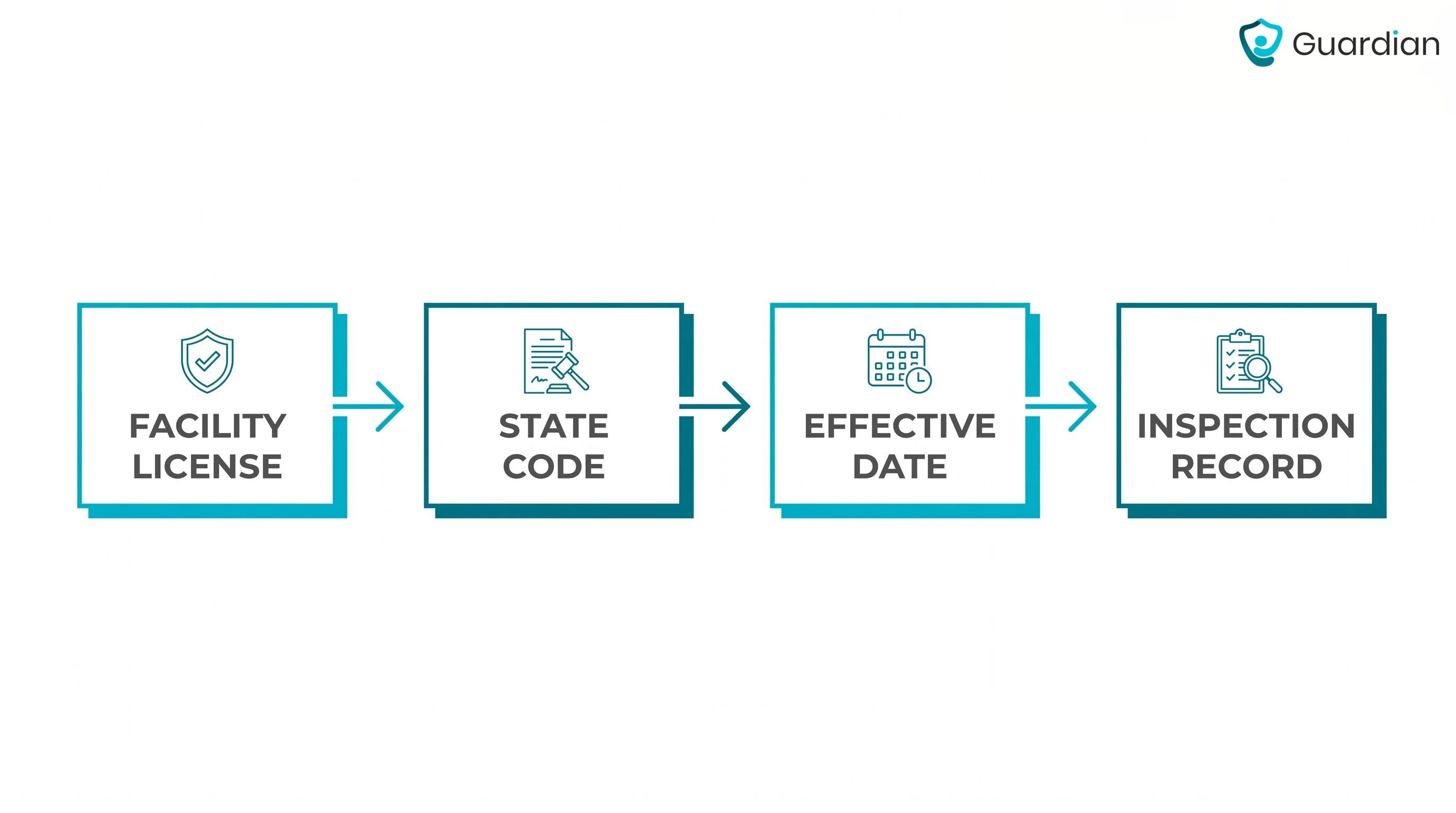
For every requirement, log the legal citation and official URL. Add its effective date and the date your team checked it.
Find the legal facility category
Start with the license label shown in the state record. The everyday term “assisted living” may not match the category that governs the facility.
Work from the record outward:
Copy the license category.
Search that category name with the state agency.
Open the code section attached to that license.
Maryland’s assisted living rules define Levels 1, 2, and 3 of care. Official citation: Code of Maryland Regulations, COMAR 10.07.14, Assisted Living Programs.
Wisconsin regulates CBRFs, adult family homes, and RCACs as separate assisted living categories. Official citation: Wisconsin Department of Health Services, Assisted Living.
Check the official source first
Start on the state licensing agency, legislature, or administrative-code site. Use summaries only to locate an unfamiliar program name.
Use each source for a different job:
State administrative code: current rule language.
Licensing agency: facility status and inspection records.
National Center for Assisted Living (NCAL) state data: license names and starting terminology.
A tracker can point to a term, but the code governs. Save the link to the exact rule section used in policy, then revisit it when the state announces a change.
Verify dates, inspections, and complaint paths
Treat rule currency and enforcement history as separate checks. A page may remain online after its rule language has changed.
Run this check in order:
Read the rule’s effective or revision date.
Record the date your team accessed it.
Search the inspection database using the facility’s license category.
Save the complaint page for families and staff.
Look for the same facility name and license number in every record. A mismatch may mean you are reading a different facility type or an outdated listing.
What families should ask
Ask for written answers, then keep the documents with your tour notes.
Is the license the right fit? Ask for the exact licensed category, admission limits, and needs that would trigger transfer, discharge, or a higher level of care.
What happens day to day? Ask who completes assessments, updates the care plan after a change or incident, assists with medication, and brings in a nurse or clinician.
What is promised in writing? Review included services, optional charges, refund and discharge terms, resident rights, and contact details for complaints, the state agency, and the ombudsman.
What does oversight history show? Review the latest inspection or survey, cited deficiencies, correction status, and complaint or enforcement history before relying on the facility’s claims.
What operators should verify and document
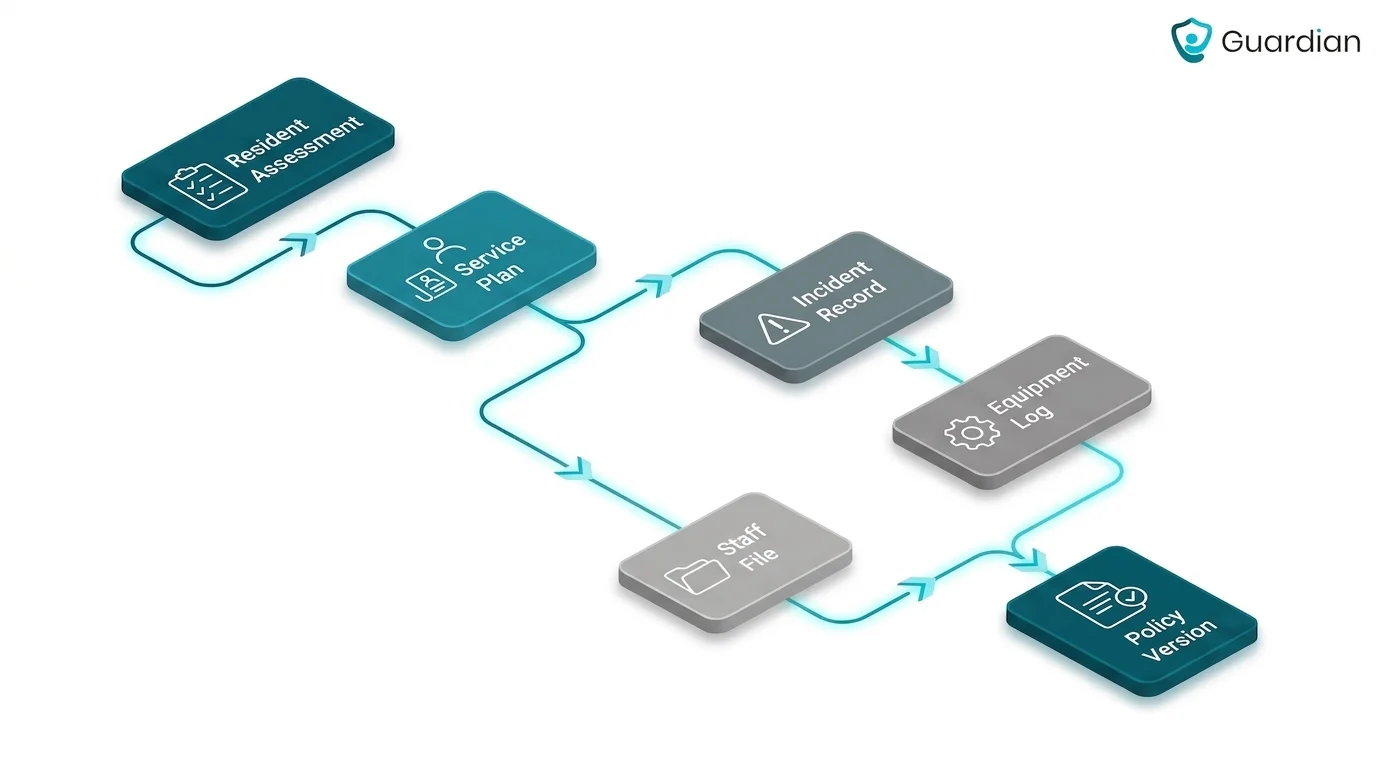
Build a simple evidence trail. Each record needs a date and a named owner, with its follow-up attached.
Resident files: Keep the current assessment, signed service plan, resident agreement, and dated revisions after a health change or incident.
Staff files: Retain background screening results, role qualifications, training dates, competency sign-offs, and evidence that required renewals remain current.
Incident records: Document falls, medication errors or near misses, suspected misconduct, required notifications, investigation findings, and corrective actions.
Policy versions: Keep the approved copy, effective date, owner, review record, and superseded version so staff can prove which procedure applied.
Equipment checks: Log testing, maintenance, repairs, and removal from service for each item used in resident care or safety.
Approved exceptions: Record the resident-specific reason, named approver, review date, and monitoring steps instead of relying on a verbal instruction.
Run a monthly record tracer using one resident file and one recent incident:
Choose a resident file and compare its assessment with the service plan.
Pick a recent incident and trace its follow-up into a staff file or equipment log.
Open the policy in force on that date and note its effective version.
Give each gap a named owner and due date.
What regulations do not tell you
Regulations describe required policies, safeguards, and records. They cannot show whether a 2 a.m. round took place, how quickly staff reached a room, or whether one shift saw recurring incidents.
Written policies set expectations for care. Time-stamped, location-linked records can document alert activity, caregiver arrival, and visit duration.
Turn regulatory expectations into real-time proof with Guardian
Written policies cannot show how a shift unfolded. Guardian provides camera-free activity monitoring with time-stamped sensor events and caregiver arrival records linked to rooms and beds.
Managers can use Guardian's time-stamped event records to review alerts and visits. State requirements, care plans, and clinical decisions remain with the facility.
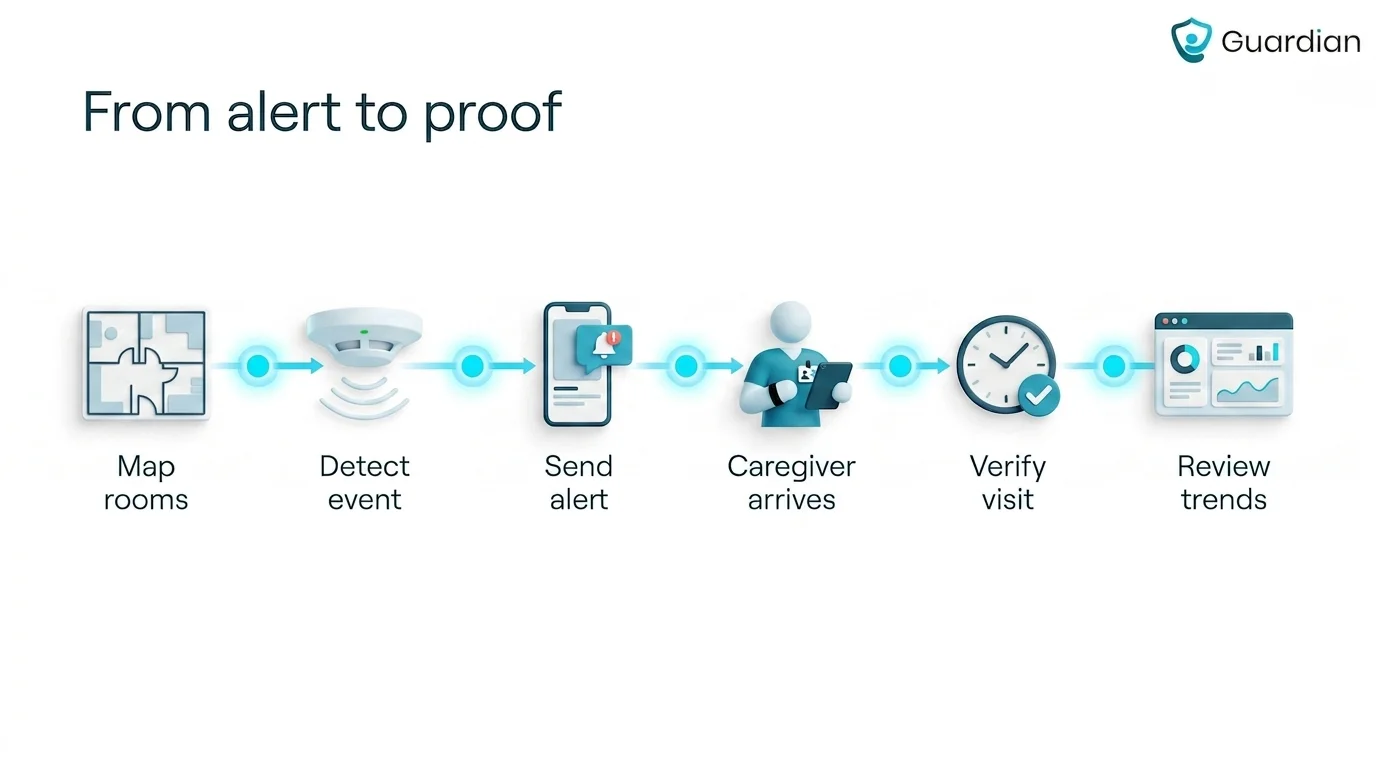
Guardian connects sensor activity, staff alerts, and visit records:
Map the setting. Guardian digitizes your floor plan and links each sensor to a specific room or bed, so every event has location context.
Monitor without cameras. Motion, bed, door, fall, and SOS signals cover key risk windows without recording images or requiring constant resident action.
Route actionable alerts. Configurable rules surface events that need attention and send the resident, event, time, and location to staff devices already in use.
Record incident activity. Guardian captures incident activity and verifies caregiver arrival, location, and visit duration.
Review device status and activity. Managers can confirm device status, compare response and visit data, and review recurring activity by room, shift, and time period.
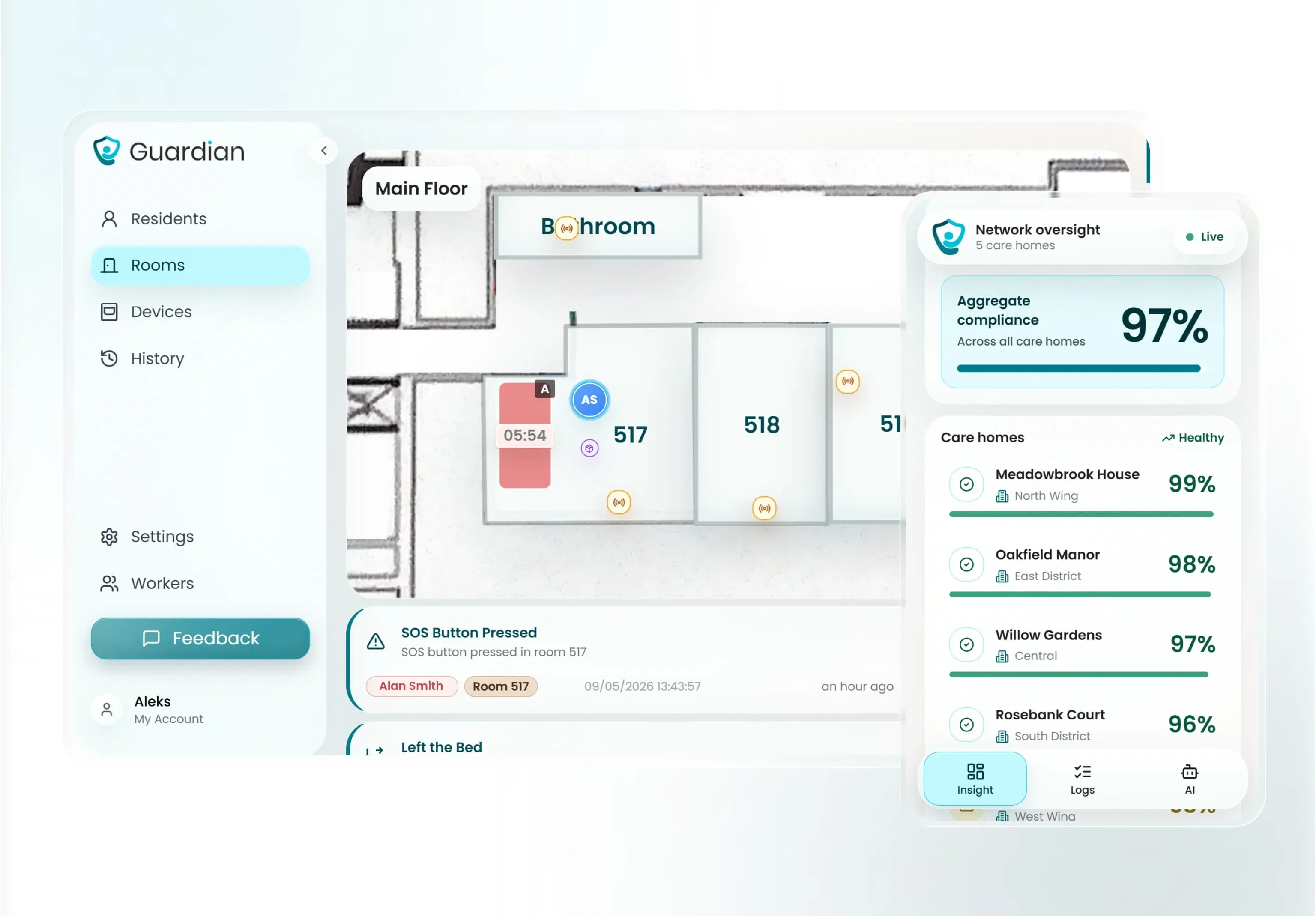
Deployment takes about a week and needs no drilling or cabling. A 6–8 week pilot then measures performance in one ward, home, or team.
At the end of the pilot, the impact report includes:
Response times: How quickly staff handled nurse calls, falls, exits, and SOS events.
Visit verification: Which visits were recorded with timestamps and durations.
Alert quality: Total alert volume and the count requiring caregiver action, broken down by event type.
Operational value: Staff feedback, incident trends, and estimated reporting time saved for the ROI calculation.
Assisted living rules may set a numeric staffing baseline or require sufficient staff for residents’ assessed needs. The applicable state rule decides which standard applies.
States may assess staffing through:
Continuous coverage: staff presence during required hours.
Awake staff: overnight coverage requiring staff who remain awake.
Written plans: documented coverage for every shift.
Memory-care rules: extra requirements for designated dementia services.
Georgia publishes direct-care staffing baselines and requires facilities to add staff when resident needs demand it. Check the Georgia rules alongside the applicable state code.
Inspectors can compare scheduled coverage with assessments, service plans, incident records, and staff qualifications. A posted rota alone cannot show whether the shift had the required coverage or skill mix.
Keep a dated staffing file that links schedules, attendance, credentials, and adjustments after acuity or risk changes. The staffing file shows how coverage changed as resident needs changed.
Memory care can be provided in assisted living under state-specific licensing or designation rules.
Rules for a memory-care designation may cover:
Dementia training: staff preparation tied to the service offered.
Assessments: documentation of each resident’s care needs.
Staffing: coverage matched to the unit’s risks.
Safety procedures: monitored areas and emergency steps.
Service disclosures: clear information for residents and families.
Operators should confirm whether the state requires a separate endorsement or unit approval. Policies and staffing records should match the memory-care services described to residents and families.
Daily monitoring should follow each resident’s assessment and care plan. Written escalation steps should cover wandering risk or a fall.
A facility may retain a resident only when the resident’s increased care needs remain within the licensed care level and residency agreement.
Review three records before deciding:
Licensed care level: defines care the facility may provide.
Current assessment: records the resident’s present needs.
Residency agreement: sets service limits and transfer terms.
Reassess after a material change in condition. Document whether available staff, equipment, and permitted services can meet the resident’s current needs safely.
Transfer may be required when:
Care exceeds the license: the facility cannot provide the required service.
A state nursing limit applies: care is beyond what is allowed onsite.
Support is insufficient: available staffing or clinical support cannot meet the resident’s needs.
Follow the state rules governing transfer notices and planning. Keep a transfer record that links the current assessment to the decision and required notifications.
Assisted living facilities follow the inspection schedule set by their licensing state. Complaint and incident investigations can trigger additional review.
Inspection frequency can depend on:
Facility category: the license class applied to the home.
License status: the facility’s current standing with the agency.
Compliance history: prior findings or corrective action.
Enforcement policy: the state approach to scheduling surveys.
Check the controlling rule and agency page, then record the next expected review date in the compliance calendar.
Additional review may follow:
A complaint
A reportable incident
Suspected abuse or a medication event
Evidence that resident needs are not being met
State regulators may investigate onsite or request records first.
Keep one complete incident file. The incident file lets the operator respond without reconstructing events from separate logs.

Author
Aleks Timm
Aleks Timm leads Guardian and builds privacy-first operations technology for care homes and home care providers. Teams get location-aware alerts they can act on, clearer situational awareness, and measured insight into how care work actually runs.
Read MoreRecommended reads
Keep reading
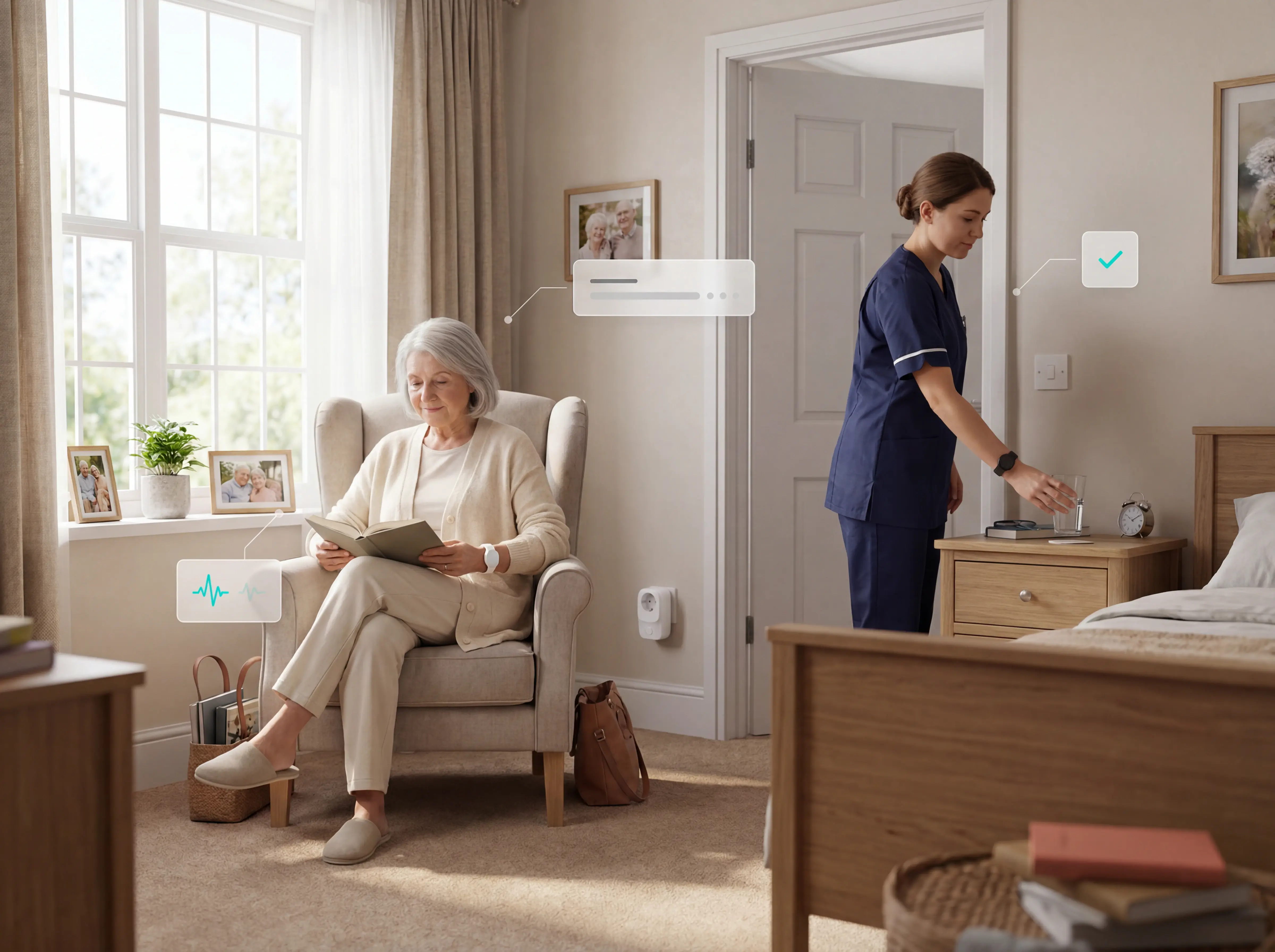
Remote patient monitoring: a complete guide
Remote patient monitoring: the complete guide to sensors, benefits, and buying tips for safer care homes and better resident...
Read more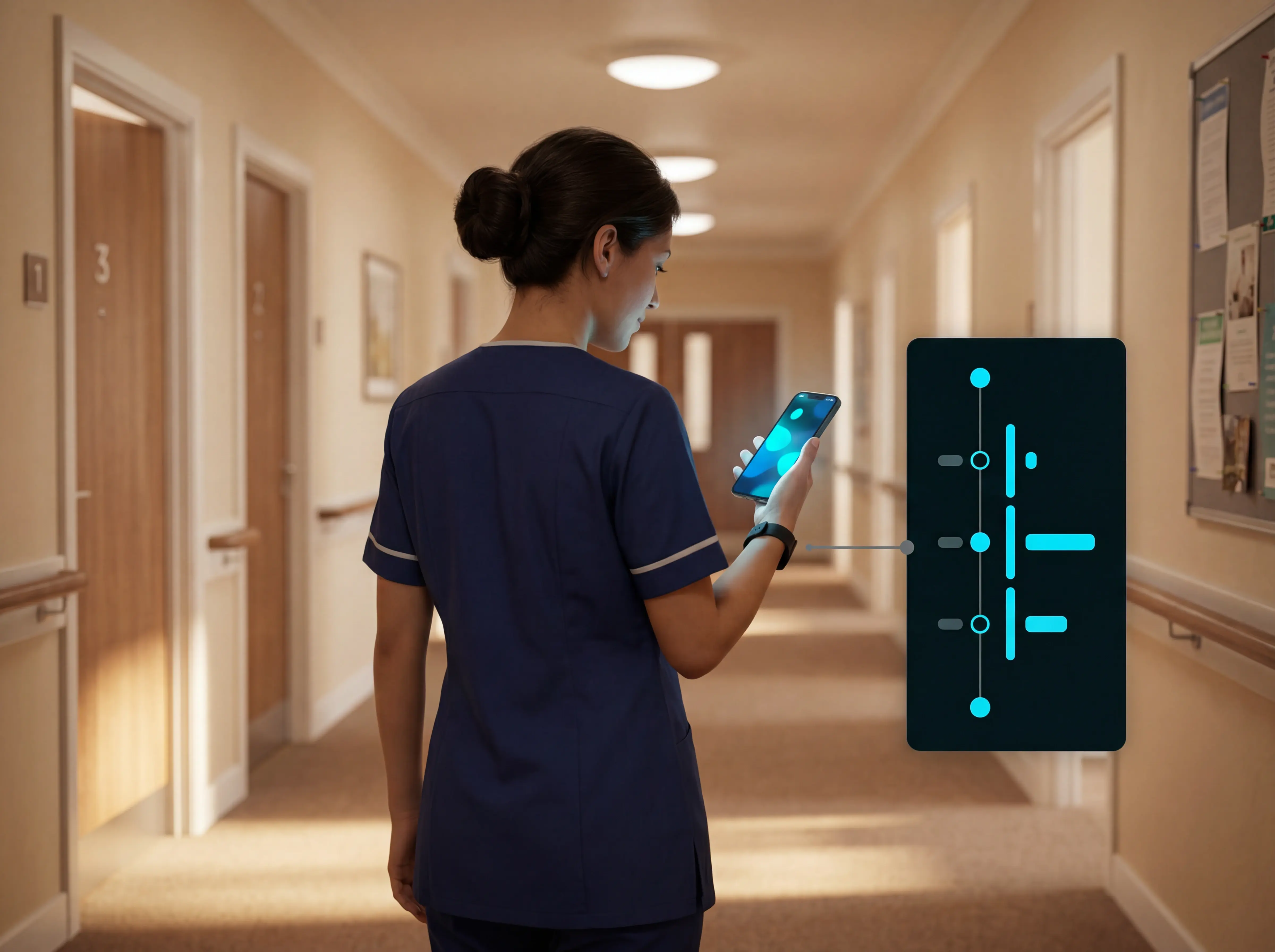
WiFi nurse call system guide for care homes
WiFi nurse call systems explained: alerts, clean records, and no wiring—compare options and choose the right setup for your care...
Read more
Patient bed alarms for elderly & hospital care
Patient bed alarms help prevent falls in elderly and hospital care. Compare alarm types, choose the right sensor, and protect...
Read more