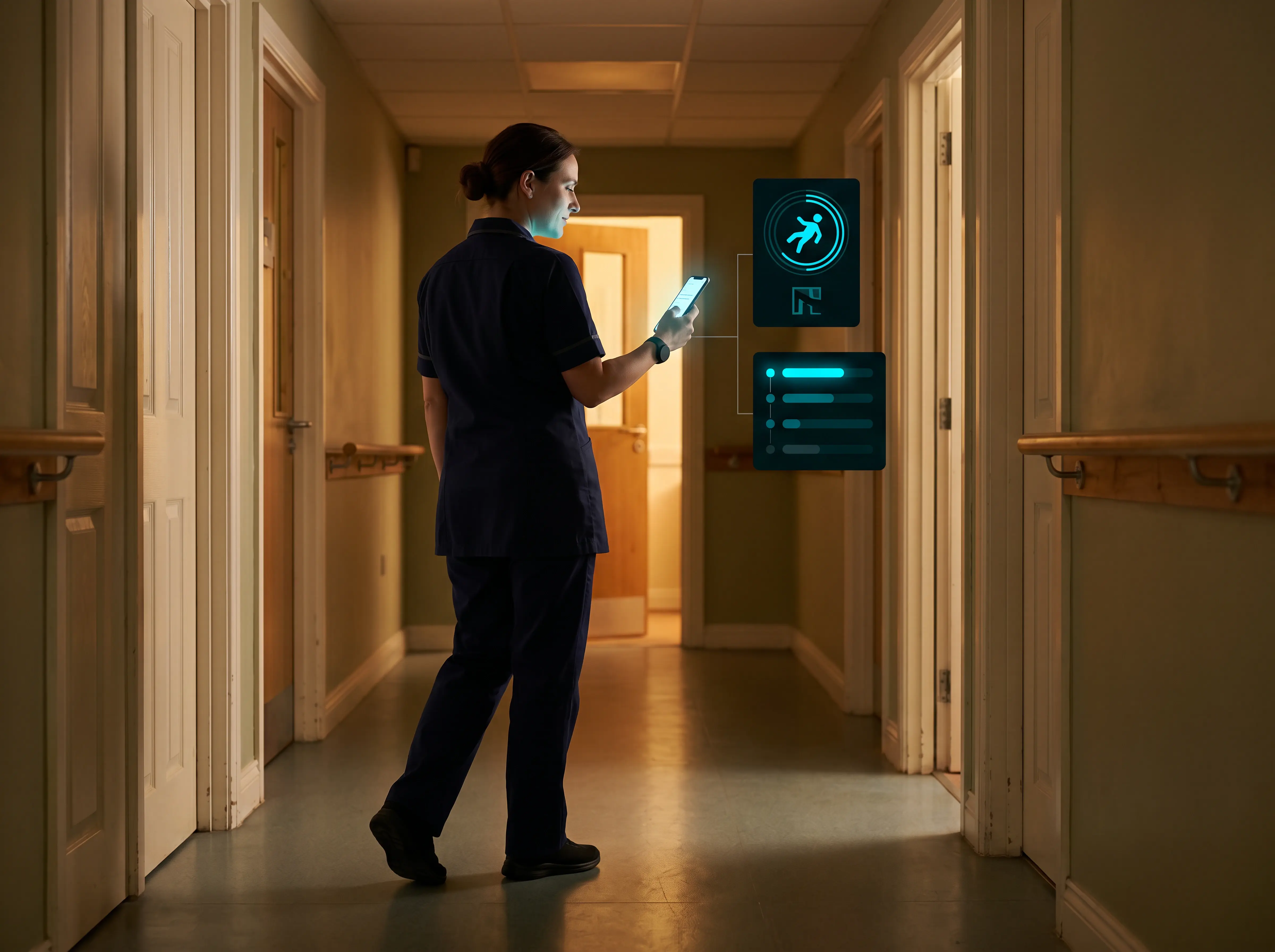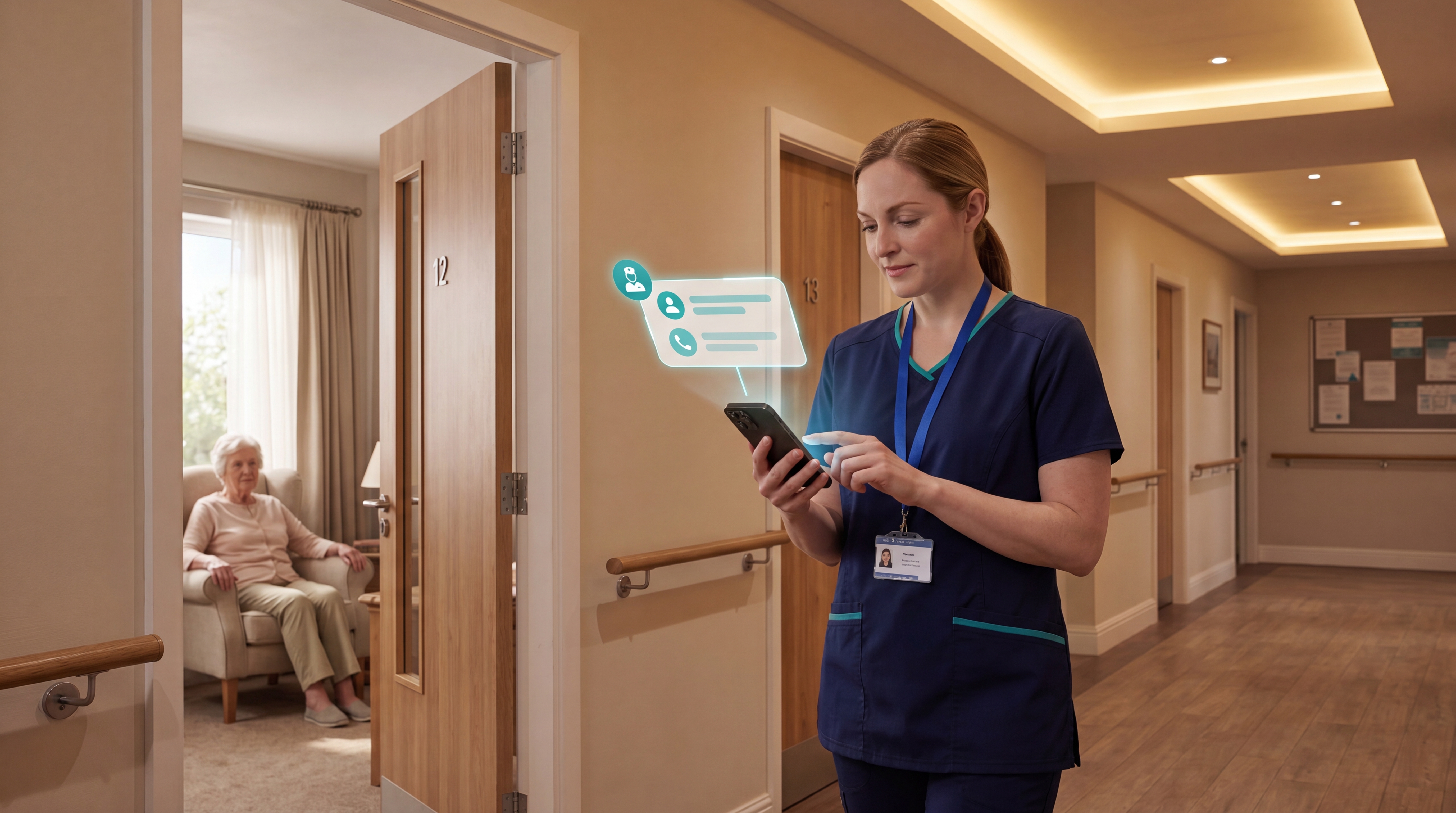
WiFi is the right fit when...
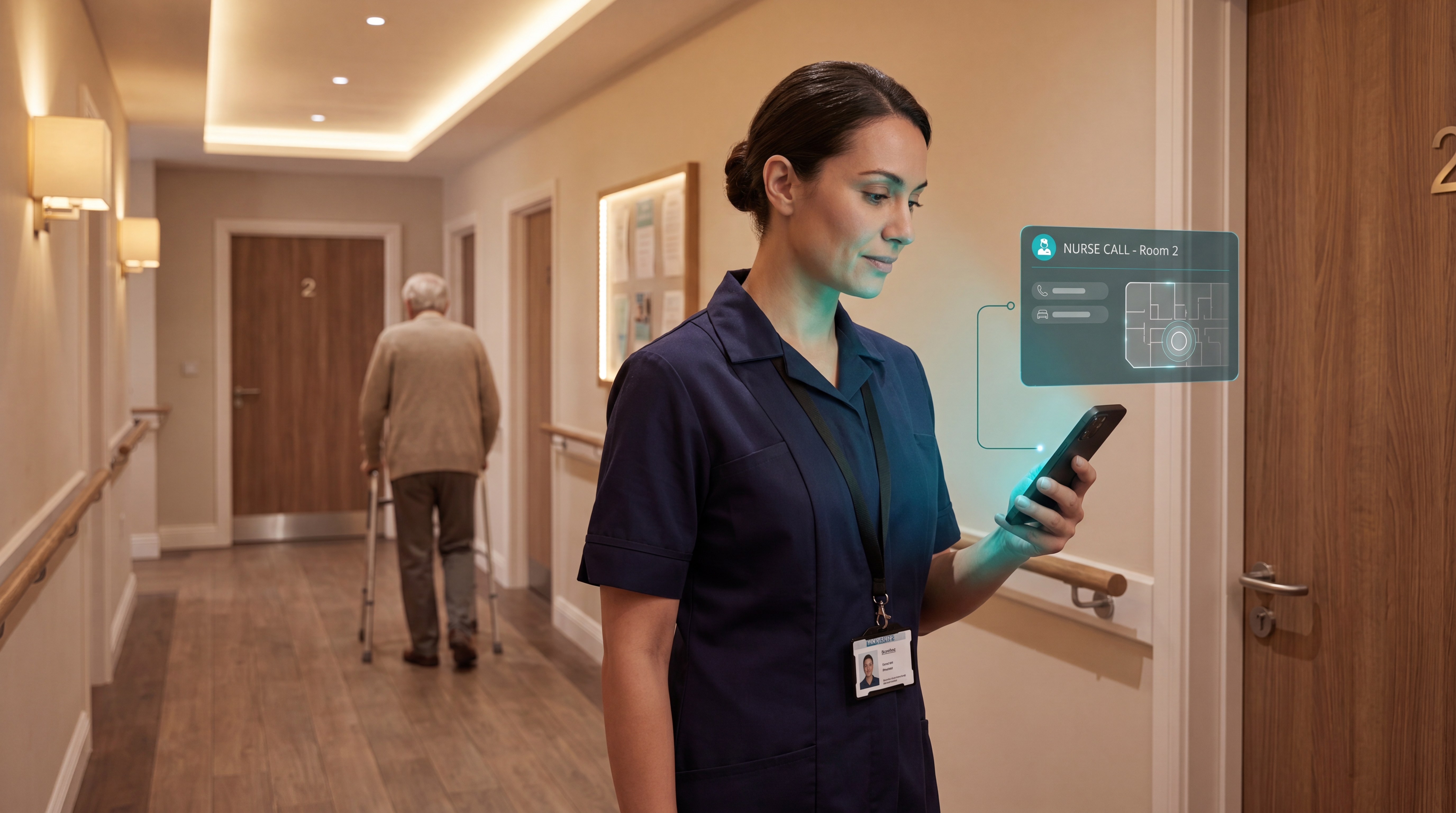
Staff need mobile app-based alerts on smartphones they already carry.
The facility has a reliable existing WiFi network.
Quick deployment on existing infrastructure is needed, with setup running about a week per ward.
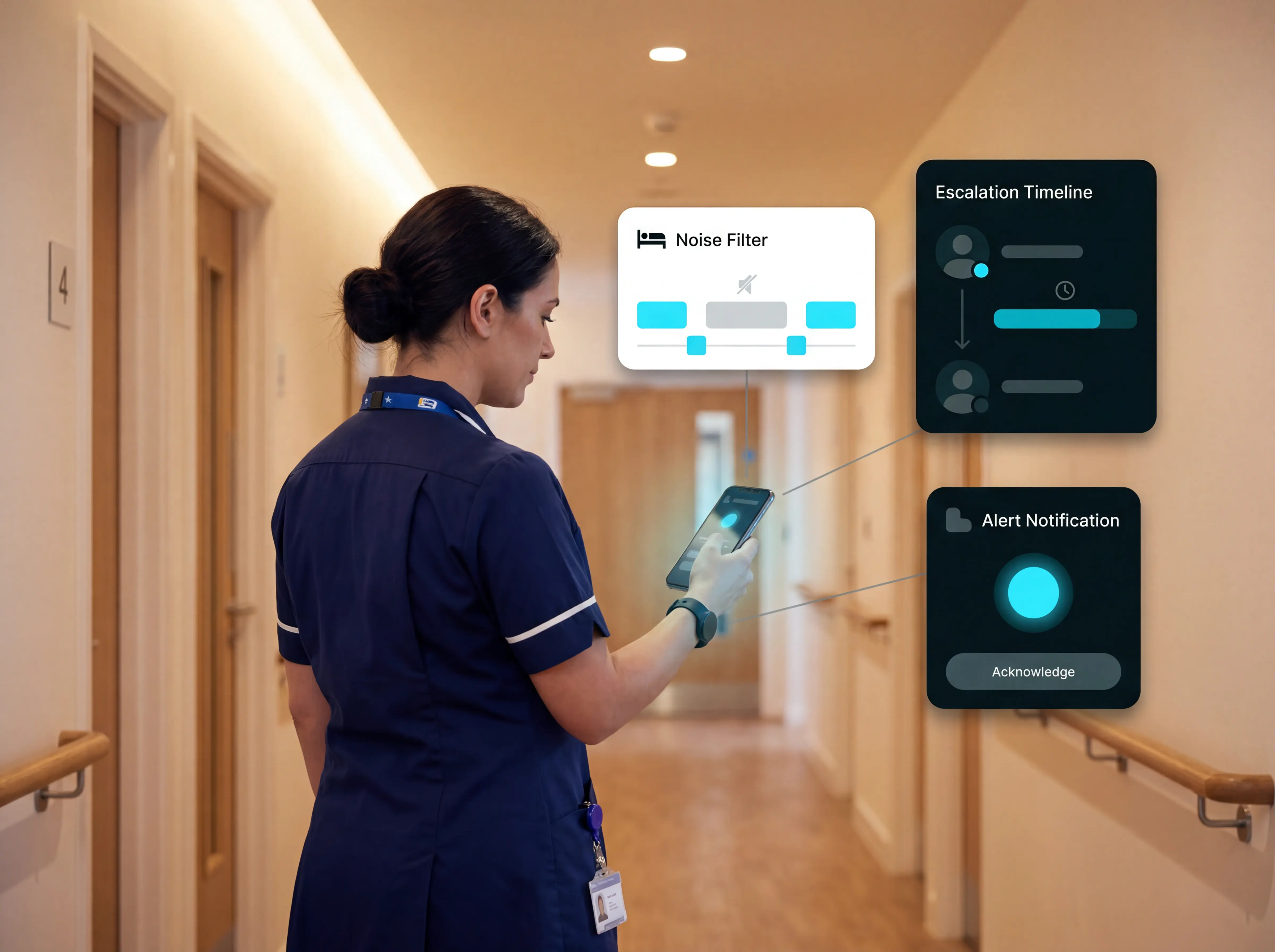
WiFi Nurse Call Systems
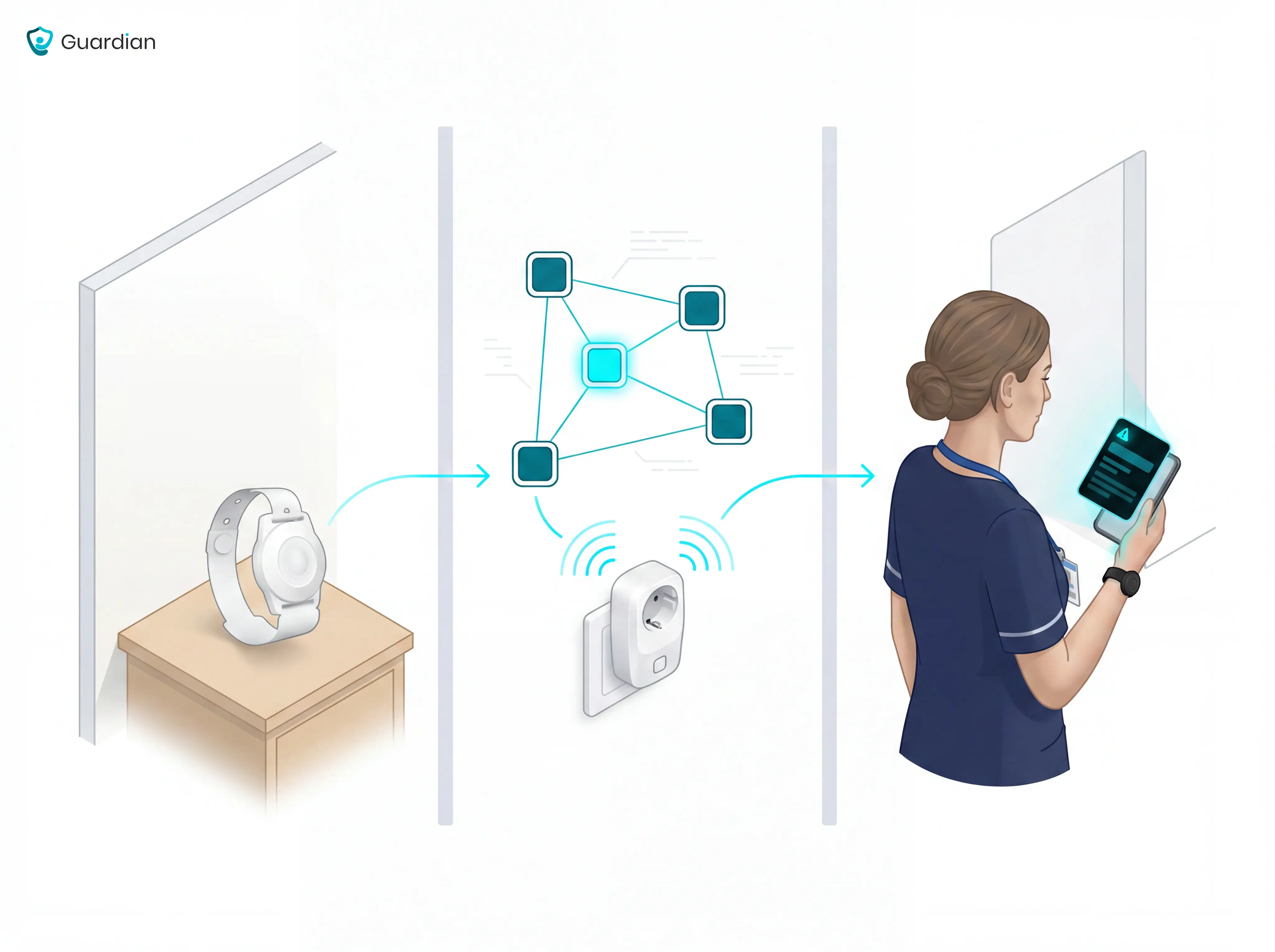
How it works
System types
| Column 1 | Wired | Wireless (RF) | WiFi |
|---|---|---|---|
| Installation | Cabling through walls, floors, and ceilings. Disruptive in operational facilities. | Buttons mount where needed. No major construction. | Routes over existing IP network. No separate cabling or RF hardware. |
| Coverage | Fixed to designated call points where cabling was installed. | Extends throughout facility. 900MHz mesh options penetrate walls consistently. | Facility-wide via existing network. Check for dead spots in older buildings. |
| Network dependency | Standalone. No network required. | Operates on dedicated RF frequency. No WiFi dependency. | Shares facility network. Encrypted communications. Interference managed through channel planning. |
Choosing your infrastructure
Features that matter
Facility types
Facility types
Guardian in action
Buyer's guide
Ward pilot
Common questions
Author
Aleks Timm leads Guardian and builds privacy-first operations technology for care homes and home care providers. Teams get location-aware alerts they can act on, clearer situational awareness, and measured insight into how care work actually runs.
Read MoreRecommended reads

Smart nurse call systems for care homes and home care providers: compare features, improve response times, and choose the right...
Read more
A complete guide to wireless patient monitoring systems, connected sensors, alert logic, care-home deployment, privacy, and...
Read more
How to install a nurse call system with less disruption: plan devices, wiring, testing, and handover step by step for a smoother...
Read more