

9 Hillrom Competitors and Alternatives for Care Homes
In this article
Replacing a Hillrom workflow is not only a hardware decision. Care homes need to compare who receives each alert, what location staff see, and what response record remains.
This guide covers nine Hillrom competitors and alternatives for caregiver alerts, nurse call, monitoring, and response records. It does not compare hospital beds, diagnostics, or Baxter’s full medical technology portfolio.
Use the operating-model and buying-context tables to separate ward systems from household, consumer, and monitoring-centre products.
Who Hillrom is today
Hillrom is now presented as part of Baxter, not as a separate public company. Baxter’s current Hillrom site covers connected care, medical devices, and several care settings.
This comparison focuses on Hillrom’s care communications and connected-care workflows, including nurse call, patient monitoring, and bedside response. Buyers replacing beds or diagnostic equipment need a different comparison.
Item | Current Hillrom status |
|---|---|
Corporate parent | Baxter International |
Primary category | Connected care and medical technology |
Known product areas | Hospital beds, patient monitoring, diagnostic and workflow systems |
Notable market fact | About 75% hospital bed market share cited by The American Prospect |
Caregiver alert systems compared
Start with the operating model, then check market availability and buying conditions. Guardian is included as one of the nine compared options, not as a separate tenth tool.
Alert and response model
Tool | Primary setting | Response model | Subscription-free | Standout comparison point |
|---|---|---|---|---|
Guardian | Professional care facilities | On-site staff alert routing | No | Floor-plan mapping and location-aware resident alerts |
Tunstall Healthcare | Care homes and group living | 24/7 monitoring centers | No | Managed service with hardware and external monitoring |
Lifeline | Individual home use | U.S.-based response centers | No | PERS pendant and mobile GPS emergency dispatch |
Smart Caregiver | Home care and small facilities | Local pagers and alarms | Yes | Standalone bed-exit and door alert hardware |
Nomo Smart Care | Family-monitored home use | Family Care Circle alerts | No | Routine-tracking with home environment sensing |
SensorsCall | Home care | App-based caregiver alerts | No | Room activity plus temperature, humidity, and air quality monitoring |
Apple Watch | Individual consumer use | SOS and local emergency calling | Yes | Fall detection and personal health tracking |
WanderGuard-style systems | Memory care and senior living | On-site professional staff alarms | No | Elopement prevention with door control |
DIY tracking tools | Family consumer use | Smartphone notifications | Yes | Low-cost proximity and location tracking |
Market, monitoring, and buying context
Tool | Market context | Passive monitoring | Buying model |
|---|---|---|---|
Guardian | UK, EU, and United States | Yes, through in-room sensors | No public consumer price; evaluated through a pilot |
Tunstall Healthcare | Multiple markets; products and services vary by country | Available in some configurations | Equipment, installation, and monitoring are quote-dependent |
Lifeline | Consumer services are primarily U.S.-focused | Automatic fall detection is configuration-dependent | Consumer pricing is public; community deployment needs a separate quote |
Smart Caregiver | Public materials and prices are U.S.-focused | Bed, chair, motion, and door sensors | One-time hardware purchases; local setup determines scale |
Institutional wander-management systems | Availability and support vary by vendor and country | Resident tags and protected-door detection | Site survey and custom quote |
Nomo Smart Care | Household product; confirm local availability | Motion, bed, sound, and household tags | Hardware and optional service pricing should be verified |
SensorsCall | Confirm availability and support in the operating country | Room activity and environmental sensing | Hardware plus recurring alert service |
Apple Watch | Available in many regions; emergency features vary | No room sensors | Watch purchase, charging, and possible cellular service |
Professional care operations
These options can support a ward, care-home site, or professional response workflow. Compare the configured alert path, location detail, response record, and regional support.
1. Guardian
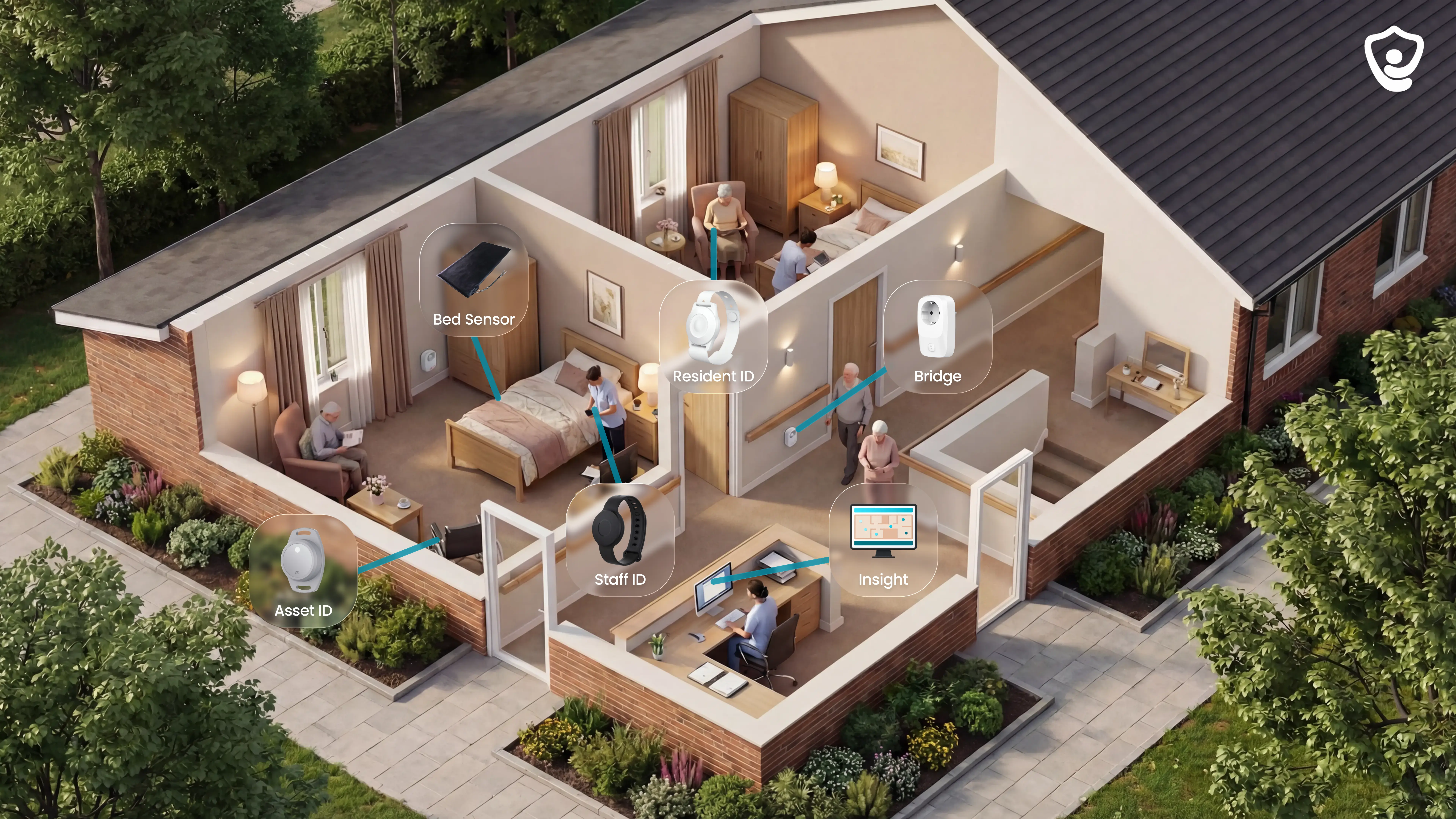
Guardian is a camera-free, wireless operations and safety platform for professional care and support organizations, including care homes, home care services, specialist-care facilities, and mental-health facilities.
Care setting: Professional care and support organizations in the UK, EU, and United States.
Alert triggers: Resident and caregiver wearables, plus bed, motion, door, fridge, and stove sensors.
Alert recipient: On-site staff receive web alerts on phones, tablets, and nurse-station computers.
Location detail: The alert identifies the resident and maps the event to a room or bed on the digital floor plan.
Response record: Visits, acknowledgements, shift times, incidents, and response activity are recorded automatically.
Deployment: Pre-configured wireless equipment can bring one ward live in about a week, without drilling or cabling.
Buying model: Guardian does not publish consumer pricing. A 6–8 week pilot measures response times, visit verification, and operational impact before rollout.
2. Tunstall Healthcare
Tunstall Healthcare provides telecare and personal emergency response products for private homes, group living, and care providers.
Care setting: Product and service availability varies by country and commissioned service.
Alert triggers: Pendant calls, home units, mobile safety devices, and compatible sensors, depending on the configuration.
Alert recipient: A monitoring centre or local care team receives the event according to the agreed service.
Location detail: Mobile products can support GPS and geofencing. Indoor detail depends on the installed equipment and integrations.
Response record: Triage, escalation, and reporting fields vary by monitoring arrangement.
Deployment: Radio coverage, network compatibility, device ownership, and migration terms belong in the site quote.
Buying model: Equipment, installation, and monitoring are quote-dependent. Public Australian materials do not establish pricing or support for Estonia or the wider EU.
3. Lifeline
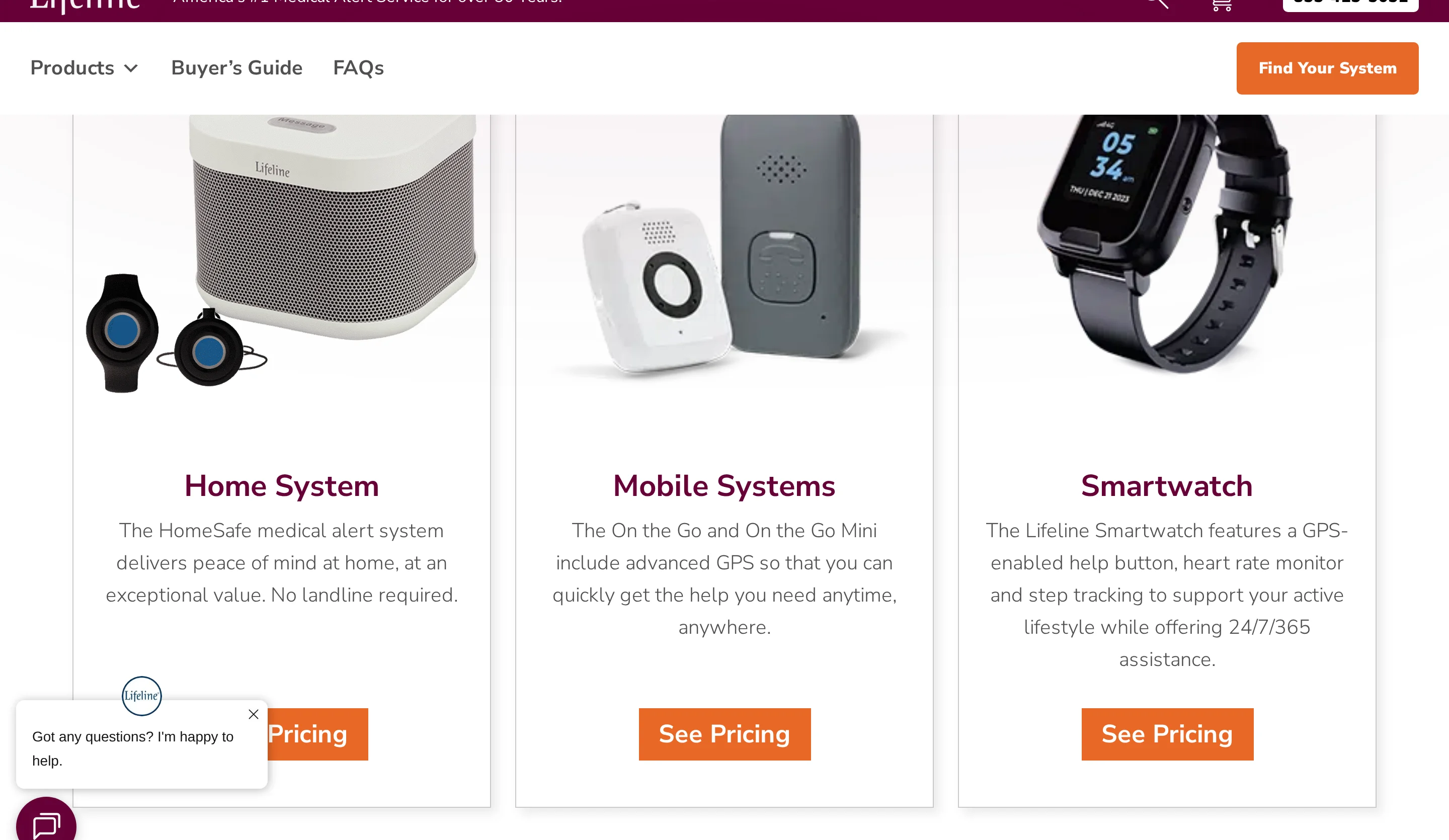
Lifeline provides personal emergency response for private homes, alongside separate workflow products for senior-living communities.
Care setting: HomeSafe and mobile products serve individual U.S. subscribers. Community deployments use a different product and service scope.
Alert triggers: Button presses and optional automatic fall detection.
Alert recipient: The response centre assesses consumer events and contacts help. Community staff routing depends on the facility product.
Location detail: Mobile devices use GPS and Wi-Fi positioning. Consumer materials do not describe room-level ward positioning.
Response record: A shared facility record depends on the community workflow, not the individual HomeSafe plan.
Deployment: Home units use landline or cellular connections; community deployment needs a separate site assessment.
Buying model: Public prices describe U.S. consumer plans, not care-home deployment. Confirm equipment, activation, monitoring, and community costs separately.
4. Smart Caregiver
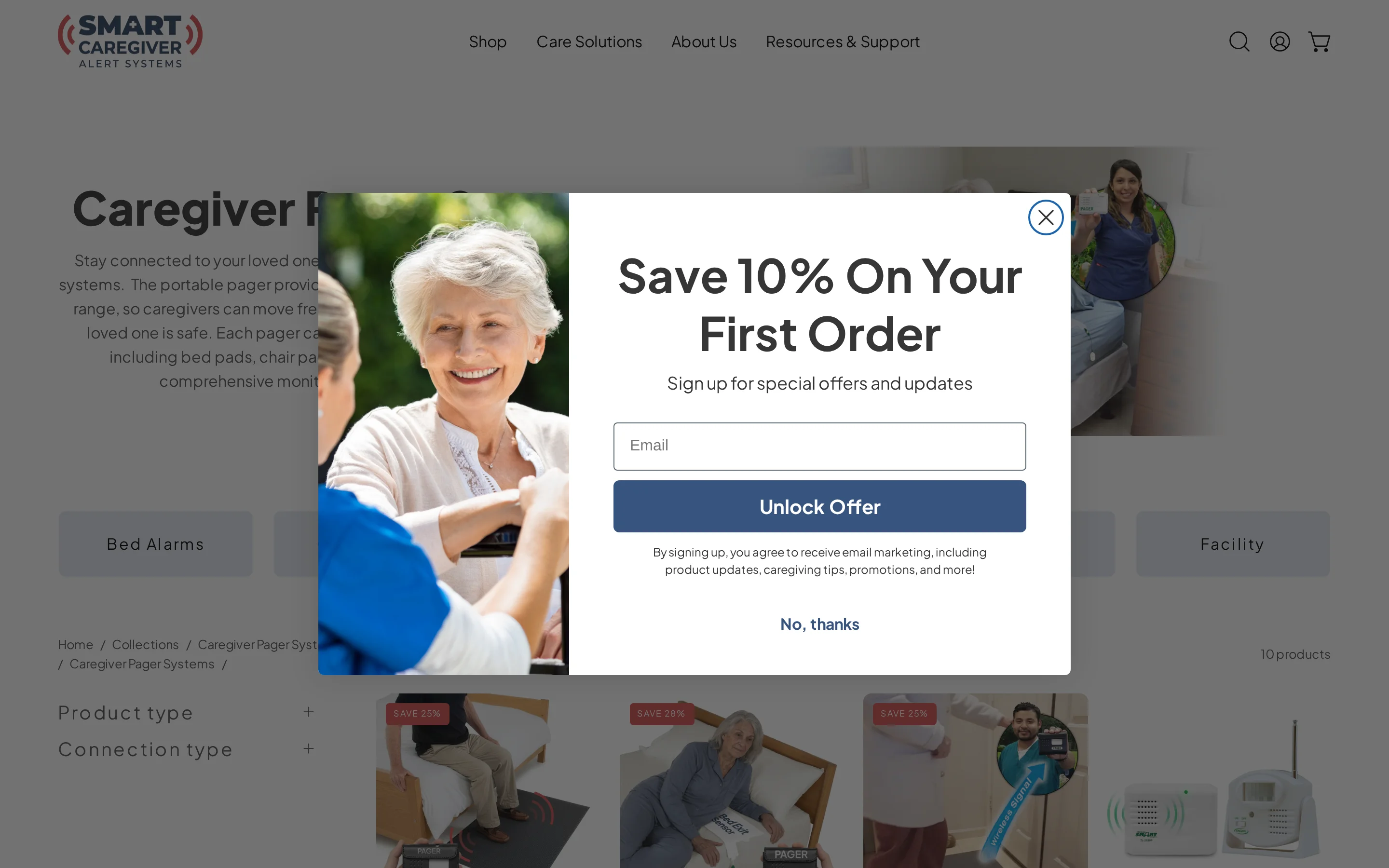
Smart Caregiver sells local alert hardware for private homes and smaller care settings, without a required monitoring subscription for the standalone configurations described.
Care setting: Nearby-caregiver workflows using paired sensors, pagers, and local monitors.
Alert triggers: Bed, chair, motion, doorway, and door sensors.
Alert recipient: A paired pager or central local monitor receives the event.
Location detail: Staff see the paired sensor or resident identifier rather than a live facility floor plan.
Response record: Record depth depends on the selected local monitor and is not equivalent to a shared operations log by default.
Deployment: Published range reaches up to 300 feet in open conditions; walls and building layout reduce it. Test radio coverage on site.
Buying model: Products are sold as one-time hardware purchases. Confirm current U.S. prices, sensor capacity, batteries, and replacement needs before ordering.
5. Nomo Smart Care
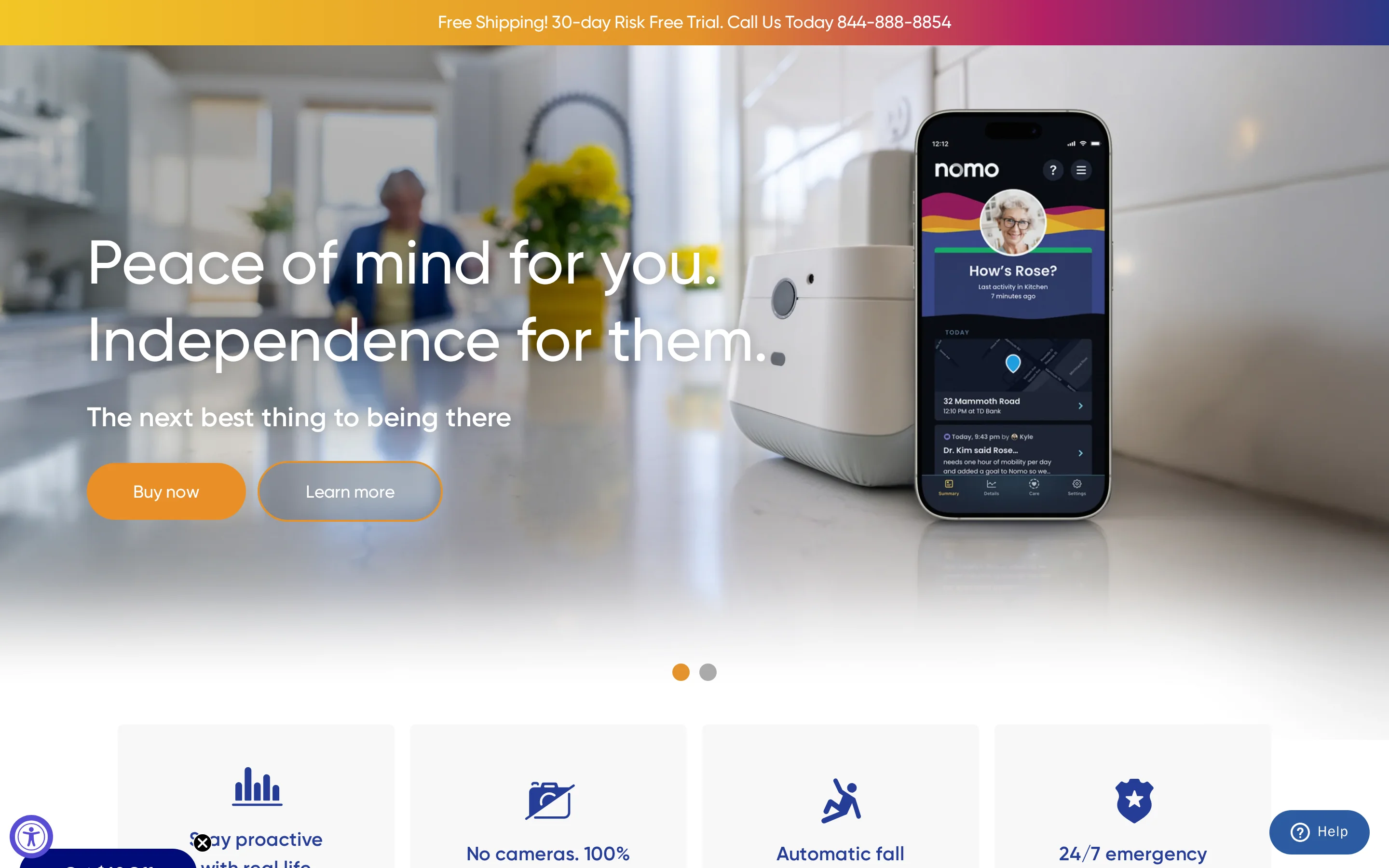
Nomo Smart Care is a household monitoring system that sends activity and safety information to a family Care Circle. An optional service can add call-centre support.
Care setting: One private home with family or nominated-contact oversight.
Alert triggers: Motion, sound, bed activity, wearable Tags, routine changes, and room temperature.
Alert recipient: Care Circle members receive app alerts; optional service coverage depends on the active plan.
Location detail: The system reports activity from placed household devices and Tags, rather than a professional ward floor plan.
Response record: App history supports household review. Confirm what can be exported or shared with a professional provider.
Deployment: Place and test each sensor, then verify app delivery and the response path with every contact.
Buying model: Nomo’s official pages have shown conflicting hardware and subscription figures. Verify current pricing and local availability directly before purchase.
Home, family, and consumer alternatives
These options cover a household or one wearer rather than a whole ward. They can still be relevant when the need is routine monitoring, personal SOS, or a single person’s location.
Category | Why buyers compare it | Main boundary |
|---|---|---|
Home activity monitors | Routine and environmental alerts | One household, family-supervised |
Consumer wearables | Fall alerts, SOS, GPS | Individual setup, limited staff workflow |
Elopement systems | Exit and restricted-area alerts | Perimeter-focused monitoring |
DIY trackers | Basic proximity or location | No care-specific alert routing |
6. SensorsCall
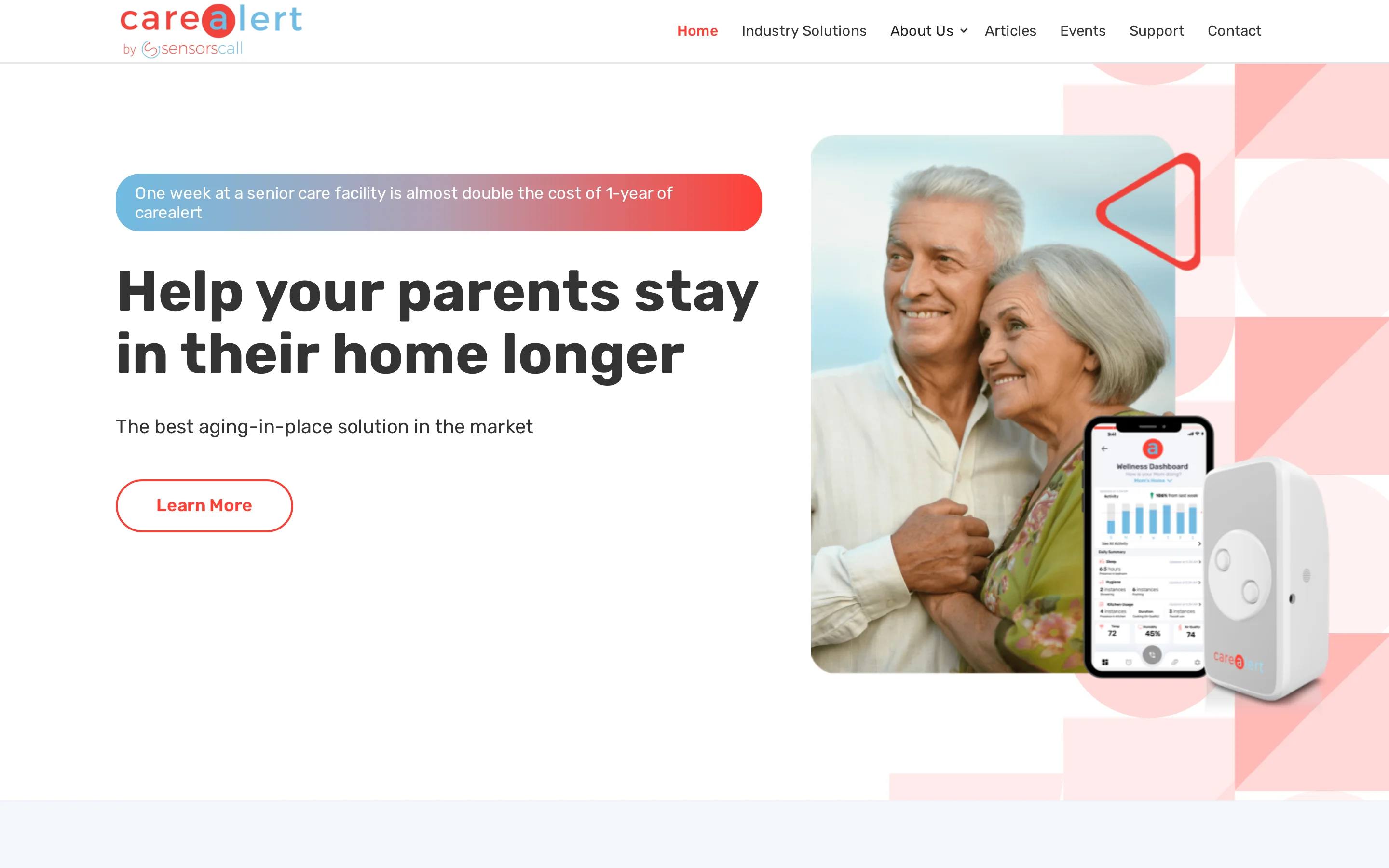
SensorsCall CareAlert combines plug-in room sensing, app alerts, and a two-way intercom. Public materials focus on private homes and also market dashboard deployments for facilities.
Care setting: Private homes, with facility use dependent on the quoted dashboard and support arrangement.
Alert triggers: Room activity, unusual inactivity, routine changes, temperature, humidity, and air quality.
Alert recipient: Configured family contacts or on-site staff receive app alerts. A staffed monitoring centre is not part of the standard contact-response model described.
Location detail: Each plug-in device represents a room or placement point.
Response record: App and dashboard history depend on the selected deployment. Public materials do not provide independent accuracy or false-alarm testing.
Deployment: Device placement, connectivity, intercom use, and staff access should be tested in the operating setting.
Buying model: Hardware and a recurring alert service are listed publicly, but current totals, taxes, shipping, facility pricing, and EU support require confirmation.
7. Apple Watch
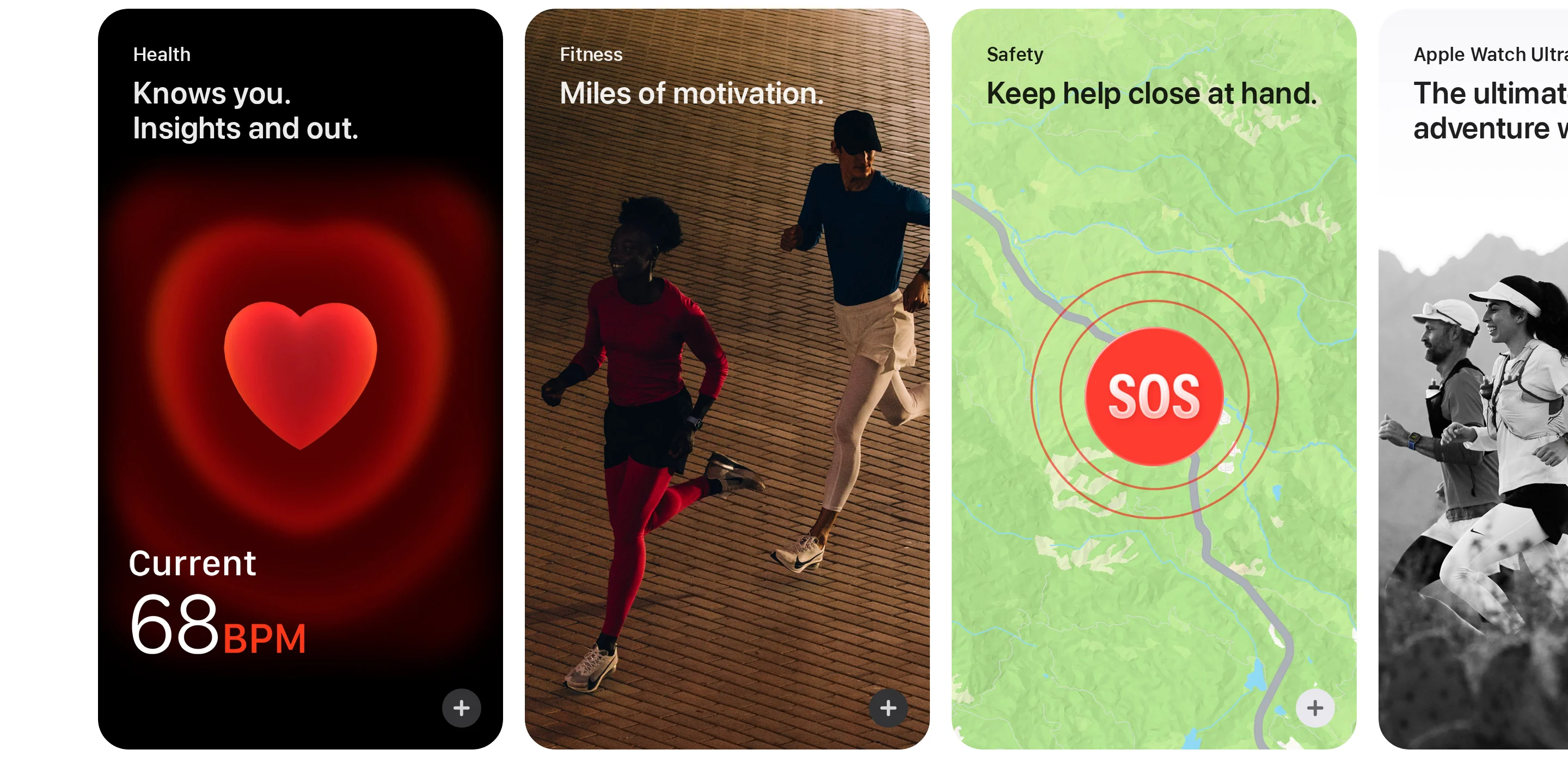
Apple Watch provides personal emergency features for one wearer. It is not designed as a native ward alert-routing and operations platform.
Care setting: Individual consumer use, with region and model affecting available emergency features.
Alert triggers: Fall Detection, Emergency SOS, and wearer-initiated calls.
Alert recipient: The wearer, emergency contacts, and emergency services according to the configured flow.
Location detail: GPS and Find My support personal location. Indoor room or bed context requires another system.
Response record: Falls can appear in the wearer’s Health app. A shared ward acknowledgement and response record is not part of the native consumer workflow.
Deployment: Each watch needs individual setup, charging, wearer compliance, and compatible connectivity. Apple notes that Fall Detection cannot detect every fall.
Buying model: Cost depends on the watch model, region, and any cellular service. A care home must also account for device management across wearers.
8. Institutional wander-management systems
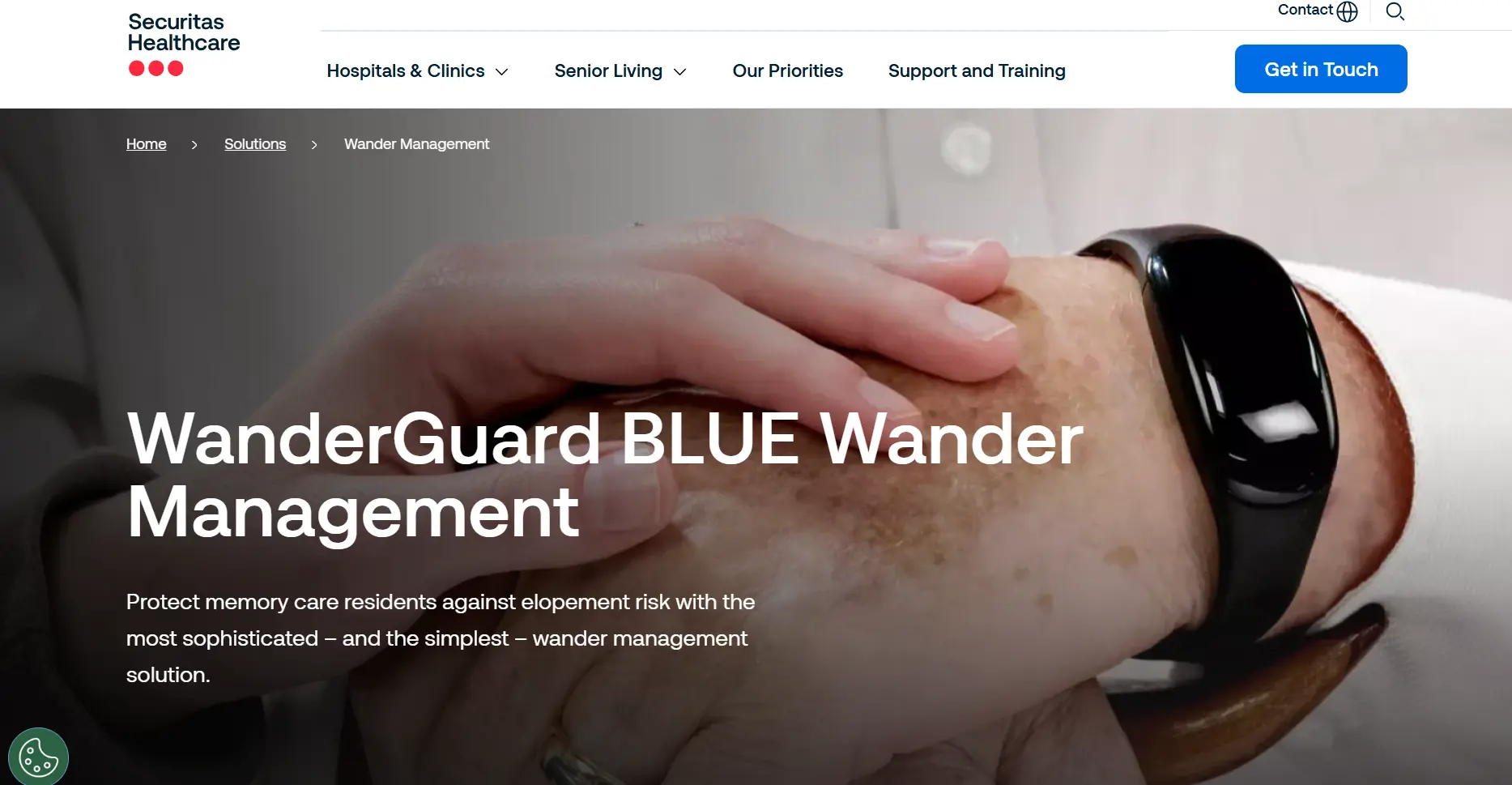
Securitas Healthcare’s WanderGuard is one example of an institutional wander-management system built around resident tags and protected exits.
Care setting: Memory care, senior living, and other sites that need controlled-exit workflows.
Alert triggers: A tagged resident approaches a monitored door or configured restricted area.
Alert recipient: The installed platform or an integration notifies on-site staff.
Location detail: The event identifies the protected door or zone. Wider indoor location depends on the selected system and installation.
Response record: Event logs, acknowledgements, and integrations vary by vendor and configuration.
Deployment: Door hardware, tags, radio coverage, locking rules, and system integrations require a site survey.
Buying model: Pricing is custom because the installed scope varies by building and number of protected exits.
9. DIY tracking tools: a cost and scope reference
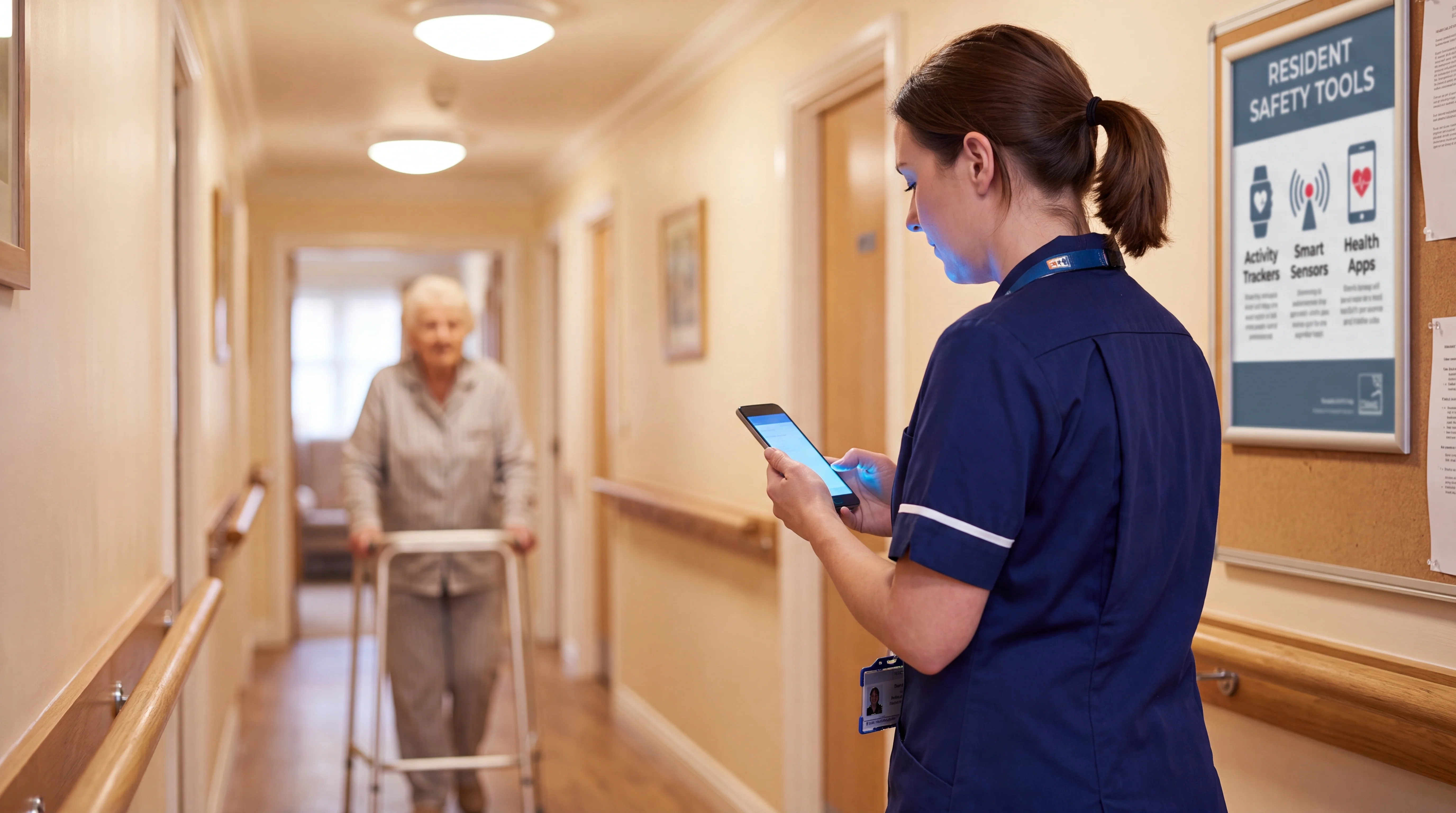
Bluetooth and crowdsourced-network tags can help locate belongings or equipment at a low hardware cost. They are not designed to route falls, nurse calls, or care incidents to a shared staff workflow.
Signal source: Nearby compatible devices help update the tag’s location.
Alert recipient: Notifications stay in a personal consumer app.
Care limits: The tag does not create a resident alert, staff acknowledgement, escalation path, or response-time record.
Privacy: Consent, account access, anti-stalking notifications, and use on a person require careful review.
Buying model: Hardware prices and optional subscriptions change by brand and market, so use current local listings only as a rough cost benchmark.
Operating need | DIY tracker | Care-home workflow |
|---|---|---|
Primary task | Locate a tagged item | Route a resident safety event |
Alert recipient | Personal phone | Shared staff view |
Location basis | Nearby compatible devices | Site-deployed infrastructure |
How to compare these options
Score each option against a real shift, not only its feature list. Record what the system provides natively, what needs an integration, and what remains unverified in your country.
Check | Question for the supplier or pilot | Evidence to collect |
|---|---|---|
Alert ownership | Which role receives each alert on every shift? | Named recipient and backup route |
Escalation | What happens when the first recipient does not respond? | Timed escalation test |
Location detail | Does the alert show a person, room, bed, zone, or door? | Screenshots from live tests |
Wearer dependency | What happens when a resident removes or cannot use a wearable? | Passive sensor coverage |
Response evidence | Are acknowledgement and response times recorded automatically? | Exportable event record |
Privacy | How does the setup protect dignity and meet local data requirements? | Data flow and retention details |
Building fit | What cabling, drilling, gateways, Wi-Fi, charging, or radio testing is required? | Site survey and coverage test |
Maintenance | Who manages batteries, devices, updates, and failed sensors? | Named owner and maintenance schedule |
Regional support | Is installation, monitoring, and service available in the operating country? | Local service terms |
Pilot proof | Can the team test response times and alert quality before rollout? | Pilot measures and success criteria |
Where single-purpose alerts leave a gap
A pendant, door alarm, or activity sensor can flag one event. The care team still needs clear ownership, exact location, escalation, and a record showing what happened next.
Guardian connects those steps in one operations view. It combines wearable and passive sensor events with room-level context and automatic response records, so the alert does not sit apart from the shift workflow.
Methodology and source limits
We selected nine Hillrom competitors and alternatives that buyers may compare for caregiver alerts, nurse call, monitoring, or response workflows. The article separates professional care systems from household and consumer products.
Methodology element | What this article used | Main limitation |
|---|---|---|
Vendor and market descriptions | Structured tool data from the supplied comparison inputs | Coverage is uneven because detailed competitor sections were not provided |
External market methodology reference | Signify Research interview-based methodology note | Single external methodology reference only |
Public sector and regulatory evidence | UK care-sector reports and guidance from the knowledge base | These sources describe sector conditions more than product-level testing |
Pricing and feature comparisons | Source-set synthesis across listed tools | Public pricing and feature disclosure are incomplete for some enterprise systems |
Test Guardian in one ward or home care team
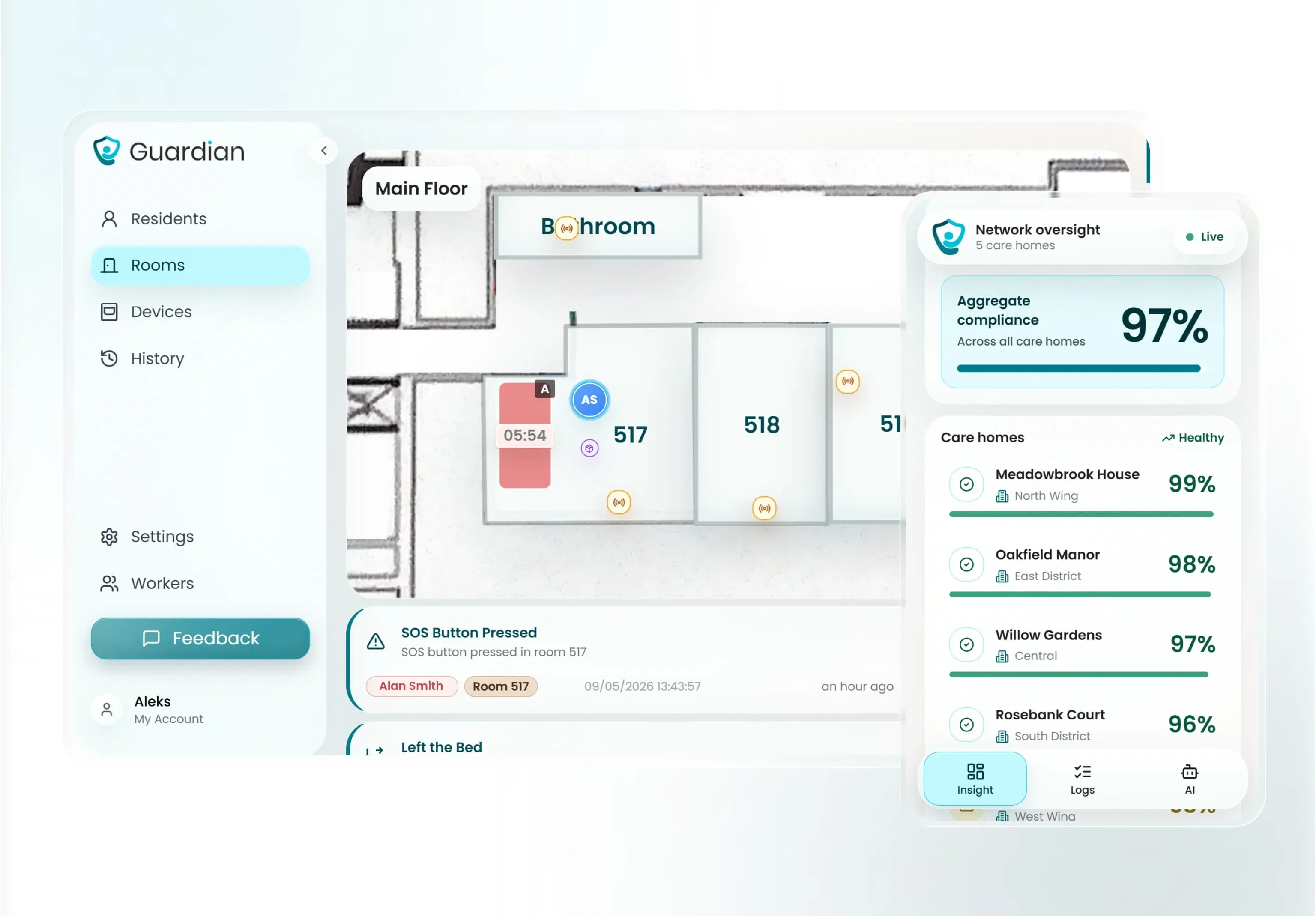
Start with one ward or home care team. Guardian maps the workflow, installs the wireless equipment, and can bring the first setting live in about a week without drilling or cabling.
Over a 6–8 week pilot, your team records response times, visit verification, alert quality, and operational impact. Use your own data to decide whether to roll out.
Operational question | Evidence from your pilot |
|---|---|
Where did an event happen? | Resident, room, and bed context on the digitised floor plan |
Did the right person respond? | Alert, acknowledgement, and response-time records |
Are visits being completed? | Automatic timestamps and visit-duration records |
Are alert rules working? | Actionable-alert data and staff feedback |
Is rollout justified? | Impact report, ROI calculation, and rollout recommendation |
No. Hillrom is presented as part of Baxter on the current official Hillrom site.
It compares caregiver alerts, nurse call, connected monitoring, location detail, and response records. It does not compare Hillrom hospital beds, diagnostics, or Baxter’s full portfolio.
Guardian, Tunstall, Smart Caregiver, institutional wander-management systems, and relevant Lifeline community products can support professional settings in different ways. Check alert routing, shared records, building fit, and local support before shortlisting.
Hillrom remains a Baxter-affiliated brand and product site, but it is not a separate independent public company. Baxter presents the current portfolio through the Hillrom site.
Apple Watch can provide personal fall detection, SOS, location, and emergency-contact routing for one wearer. A care home still needs a separate workflow for shared staff alerts, room-level context, escalation, and response records.
Test who receives each alert, what happens after a missed response, how precisely the location appears, and whether acknowledgements are recorded. Run the test across real rooms, shifts, and staff devices.
No. Guardian is camera-free and wireless. It uses wearables and passive in-room sensors, and staff receive alerts on the phones, tablets, and nurse-station computers already in use.

Author
Aleks Timm
Aleks Timm leads Guardian and builds privacy-first operations technology for care homes and home care providers. Teams get location-aware alerts they can act on, clearer situational awareness, and measured insight into how care work actually runs.
Read MoreRecommended reads
Keep reading
Smart Nurse Call Systems for Care Homes and Home Care Providers
Smart nurse call systems for care homes and home care providers: compare features, improve response times, and choose the right...
Read more
WiFi nurse call system guide for care homes
WiFi nurse call systems explained: alerts, clean records, and no wiring—compare options and choose the right setup for your care...
Read more
Wireless Patient Monitoring Systems for Care Homes
A complete guide to wireless patient monitoring systems, connected sensors, alert logic, care-home deployment, privacy, and...
Read more