

Welfare Technology Program: Time to Care. A clearer picture of life at home.
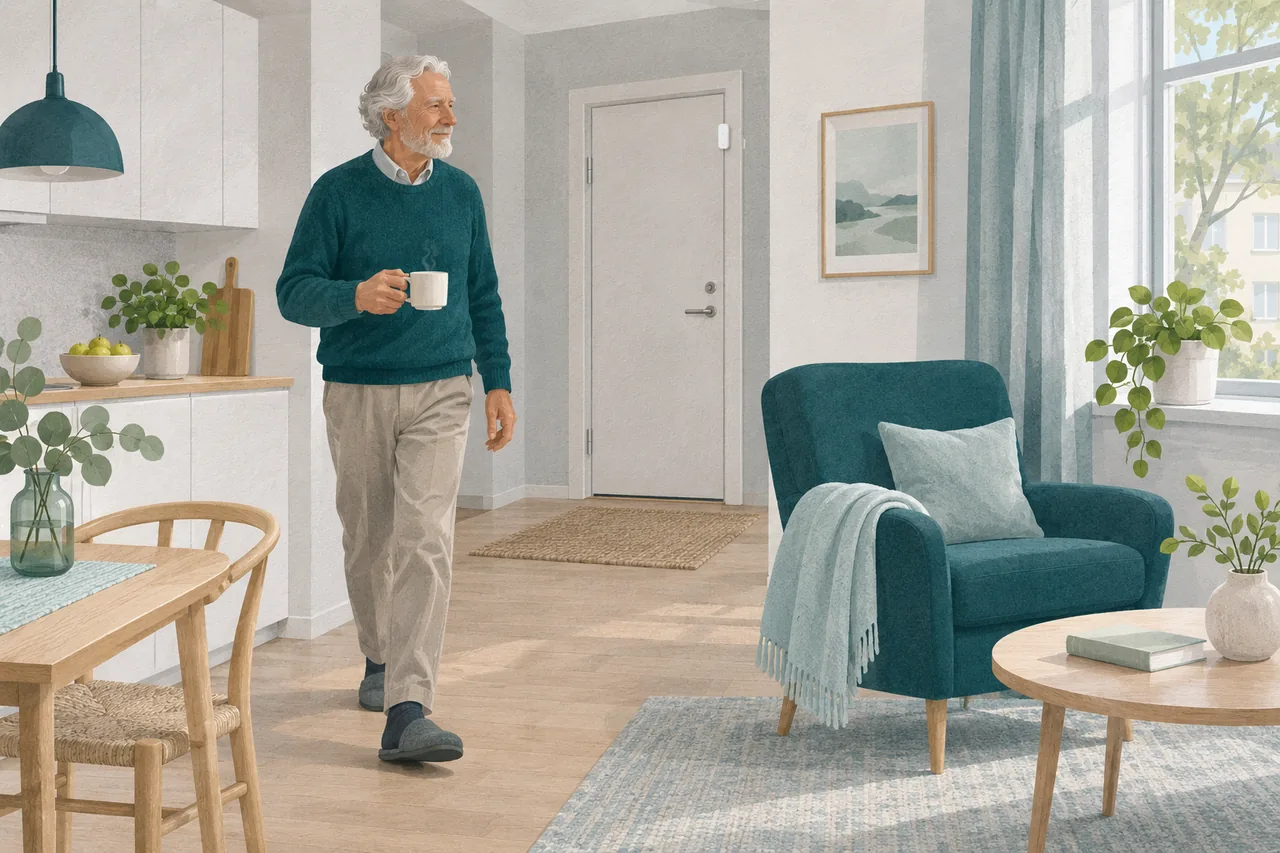
An older person wants to keep living at home. Their care team visits, but everyday life continues between those visits. Time to Care explores how home observations can help the team understand when support may be needed.

What happens between care visits?
A visit tells the care worker how someone is doing at that moment. A change in their usual activity later that day may go unnoticed until the next visit. Home sensors can add context, giving the team something to check and discuss with the person.
Time to Care connects Guardian’s home observations, SilverWise’s care plans and documentation, and Lumilaane’s staff training within Estonia’s Welfare Technology Program. These three partners bring together the information, tools and skills a team needs to assess a change at home and arrange support.
One service, three connected parts
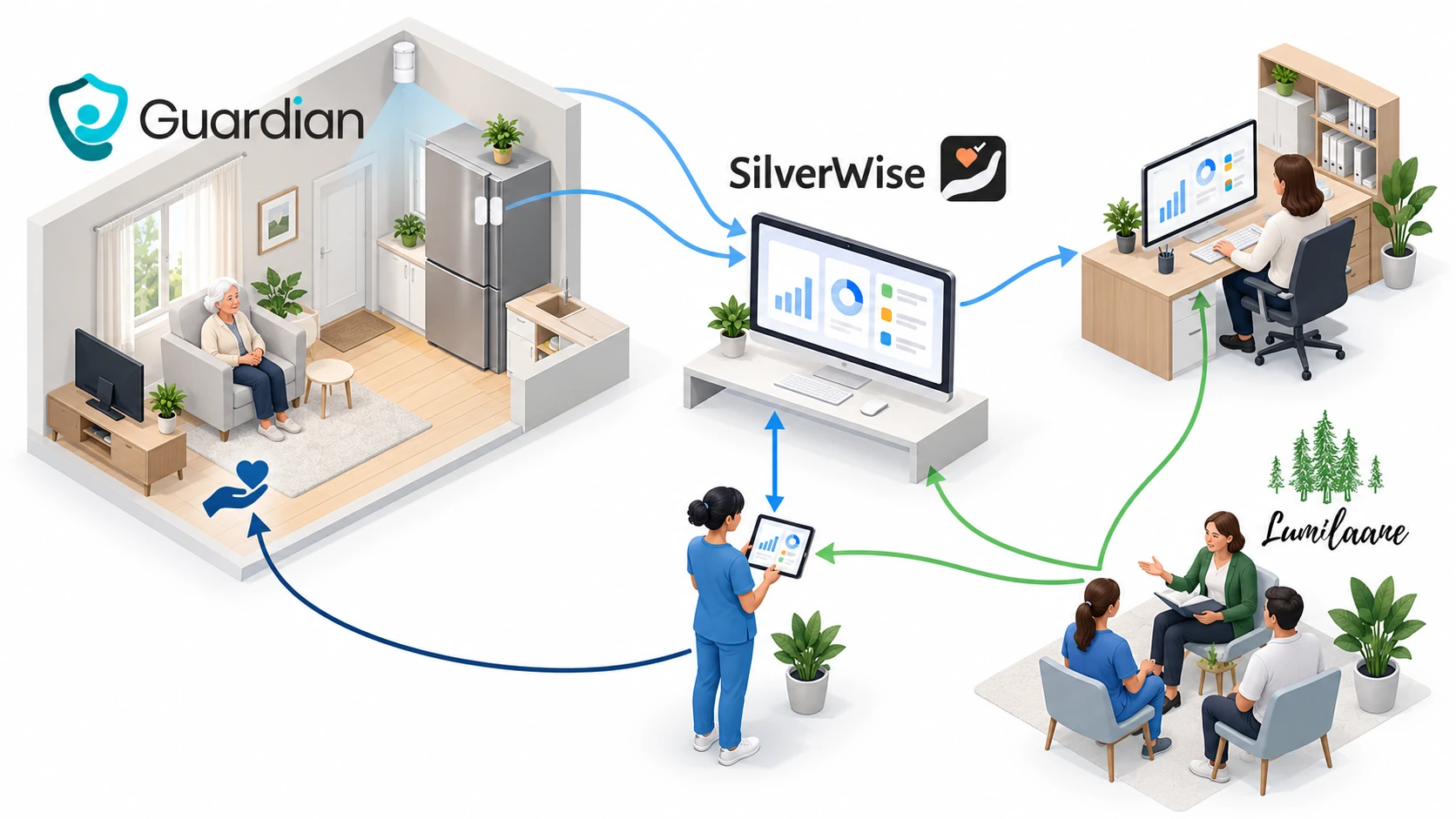
- Guardian
- Home sensors help the team notice changes in a person’s everyday routines.
- SilverWise
- Care plans, visits and follow-up give the team a shared picture.
- Lumilaane
- Staff training connects the technology with everyday care practice.
Everyday routines, useful context
Guardian adds observations from the home to the shared care concept. The presentation explores movement, smoke, refrigerator activity and medication-related routines. The devices and observations needed in each home are chosen around the person and the care service.

Notice a change
Movement and household activity can help the team recognise changes in someone’s usual routine.
Understand the context
A signal is a reason to check, interpreted alongside the person’s situation and care plan.
Arrange follow-up
Connect observations with SilverWise so the team can assign and record the next step.
A useful signal needs a clear response
In the planned service, sensors support personal contact and professional judgement. They do not replace emergency services.
- Agree on the person’s needs and the appropriate devices.
- Gather relevant observations from the home.
- Review changes alongside the care plan and human observations.
- Assign follow-up and record the action in the care workflow.
Preparing for a pilot
- 20+
- municipalities interviewed by the project
- Pilot-ready
- sensor readiness reported
- Connected care
- platform, sensors and training
The first-stage presentation reports pilot-ready sensors, a prepared training program and positive platform tests in four municipalities. Welfare Technology Program: Time to Care (English PDF)
Designing the service around the person
Before a pilot, the person, municipality and service provider need to agree on useful observations, access and response responsibilities. A refrigerator opening, for example, does not prove someone has eaten. The team still needs to check the situation and decide what support is appropriate.
Project partners








Estonia’s Welfare Technology Program
The Ministry of Social Affairs’ initiative supports independent living for older people and adults with support needs, alongside support for family caregivers and care professionals. Tehnopol, Civitta and the Estonian Academy of Arts deliver the program.
Municipalities, service providers, researchers, technology companies and service users develop solutions together. The scope includes remote care, social participation and digital tools for care workers.
Service development is followed by testing, impact evaluation and adoption. Time to Care explores how home observations, care software and training can work as one service.
- Stage I · Service development
- Six months to develop and test a service concept. Support of up to €30,000, with no own contribution required.
- Stage II · Testing and adoption
- Up to 24 months for testing, impact evaluation and adoption. Support starts at €500,000, with at least 12% own contribution. Completing the first stage is a prerequisite for applying.



More than €15 million is planned for project funding across the program, co-funded by the European Union. Tehnopol and RTK publish the funding and participation terms.
Questions about the program and Time to Care
What is welfare technology?
Technology used within care services to support independent living and everyday wellbeing. Examples include home sensors, remote care and digital tools that help care workers coordinate support.
Who is the program for?
The intended beneficiaries are older people, adults with support needs and their caregivers. Municipalities, care providers, technology companies, researchers and service users work together to develop the services.
How does Time to Care fit into the program?
Time to Care is a project within the wider program. It connects Guardian’s home observations with SilverWise’s care planning and documentation, supported by Lumilaane’s staff training. This page presents Guardian’s contribution and the project’s preparation for a pilot.
Can new applications still be submitted to the first stage?
The first application round closed on 23 March 2026. It required prior consultation. Check the official Tehnopol and RTK pages linked here for application notices and the conditions for later stages.
Plan the sensor side of a home-care service
Discuss your care setting, useful observations and the response process with Guardian.

Author
Aleks Timm
Aleks Timm leads Guardian and builds privacy-first operations technology for care homes and home care providers. Teams get location-aware alerts they can act on, clearer situational awareness, and measured insight into how care work actually runs.
Read More